Explore Our Contributors and Their Work
Browse our contributors alphabetically and explore their published scholarship in AI, education, and society.

Published Articles
 Insights March 28, 2026
From Yes-Man to Wait-Man: What Changed When I Stopped Letting AI Talk Over My Thinking
A bilingual educator examines how alignment with AI emerges not from better prompting but from deliberate boundary-setting and sustained correction over time—building on the practitioner lens first developed in Holding …
 Insights January 15, 2026
Holding the Line: Teaching Alongside AI Without Losing Voice
A bilingual educator reflects on maintaining professional judgment, voice, and human accountability while working alongside AI systems in high-need public school contexts

Published Articles
 Perspectives March 31, 2026
AI Is Not the Root: A Reflection from Nature-Based Education
A nature-based educator reflects on the tension between AI integration in education and the structural inequities it claims to solve, arguing for the enduring value of relational, place-based learning.

Published Articles
 Insights March 25, 2026
Critical Thinking for Equity on Both Ends of the AI Model
A Research Support Librarian and Open Research Champion at Sheffield Hallam University examines what transparency, equity, and responsible practice really require when black-box AI systems become routine in academic …

Published Articles
 Insights March 6, 2026
The Case for Coherent, Whole-Program AI Literacy Integration
Higher education's AI response requires systems thinking, not a triage or 'you do you' mindset — which places students last. A report from the ACORN initiative at San Diego State University.

Published Articles
 Perspectives November 12, 2026
The AI Extinction Debate Belongs in Education
The people building the most capable AI systems are publicly debating whether future AI could kill all humans. Students who will inherit decisions about these systems need to learn how to evaluate that warning: …
 Perspectives September 16, 2026
AI Education Needs Authority Literacy Before Agent Literacy
Agentic AI is shifting from answering questions to taking actions. Before students learn to make AI agents more capable, they need to learn how to define, inspect, and govern what those agents may access, decide, and do.

Joan Giovannini, M.Ed.
Society & AI Contributor · University of Massachusetts Amherst
View full profilePublished Articles
 Perspectives November 23, 2025
Is the AI-Generation AI-Damaged?
A reflective inquiry into cognitive atrophy, educational purpose, and what it means to learn when generative systems can imitate thinking faster than human minds can produce it

Marvin Starominski-Uehara, Ph.D.
Society & AI Contributor · Temple University Japan
View full profilePublished Articles
 Perspectives October 18, 2026
Trace Pedagogy: Grade the Trace, Not the Guess
When AI can polish any final product, teachers need evidence of the reasoning behind it. Trace Pedagogy makes open, peer-visible work the evidence of learning and uses exams to confirm it.
 Perspectives September 20, 2026
Japan's AI Education Guidelines Skip the Question That Matters Most
Japan's 2026 AI-in-education guidelines tell teachers how to use AI but never ask whether a given lesson needs it, a gap that recent evidence on time-to-mastery makes hard to ignore.

Published Articles
 Perspectives April 12, 2026
AI and Library Publishing: A Reflection
A Scholarly Communications Librarian reflects on how AI is reshaping library publishing programs—from ethical disclosure frameworks to the philosophical tensions between openness and author rights in an era of machine …

Published Articles
- Insights March 6, 2026
The Case for Coherent, Whole-Program AI Literacy Integration
Higher education's AI response requires systems thinking, not a triage or 'you do you' mindset — which places students last. A report from the ACORN initiative at San Diego State University.

Published Articles
 Perspectives June 15, 2026
The Emerging AI Divide in Higher Education
Drawing on experience across higher education in the UK and Malaysia, two academics argue that the real AI divide in universities is not about access to tools but about institutional readiness — and why it is an urgent …

Poulomi Chakravarty, Ph.D.
Environmental Scientist, Society & AI · Global Climate Association
View full profilePublished Articles
 Perspectives August 16, 2026
What It Costs Us Now: Toward a Life Cycle Ledger for Every AI Query
The UN has confirmed what AI firms long obscured. A case for full life cycle accounting of every query, so its true environmental magnitude can no longer be hidden.
 Photo Stories April 25, 2026
Hyderabad Earth Day Photo Story, Day Three: Young Minds Present Cooler City Futures
The concluding photo story from Earth Month 2026 in Hyderabad, where learners presented their Cool Your City Challenge models, welcomed environmental advocates, and received awards for climate and biodiversity design.
 Photo Stories April 23, 2026
Hyderabad Earth Day Photo Story, Day Two: Pollinators, Heat Maps, and Cooling the City
A follow-up photo story from day two of Earth Month 2026 in Hyderabad, where children explored pollinators, real-time climate maps, and city-cooling design through collaborative art.
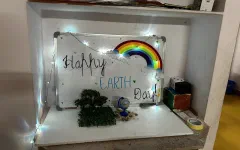 Photo Stories April 23, 2026
Hyderabad Earth Day Photo Story: Learning From the Ground Below
A photo story from the opening day of Earth Month 2026 in Hyderabad, where children explored soil as a living system through observation, worksheets, magnifiers, and shared discussion.
- Perspectives January 10, 2026
The Invisible Cost of Every Chat
AI companies warn us about accuracy—but remain silent on the environmental footprint of every query

Published Articles
- Perspectives June 15, 2026
The Emerging AI Divide in Higher Education
Drawing on experience across higher education in the UK and Malaysia, two academics argue that the real AI divide in universities is not about access to tools but about institutional readiness — and why it is an urgent …

Published Articles
 Research February 13, 2026
To Boldly Go Where Our Purpose-Built AI Had Not Gone Before
Teacher educators document how a purpose-built math bot evolved into a broader instructional co-designer through exploratory prompting.

Published Articles
 Perspectives September 20, 2026
I, Me, Myself: Black Coffee and ChatGPT
An honest reflection on the role of educators in the ongoing discussion surrounding AI in education, critical thinking, curriculum integration, teacher accountability, and the changing dynamics of the student-teacher …

Published Articles
 Perspectives October 5, 2026
School Years vs. Release Cycles: Teaching in a World That Updates Weekly
AI models are launched faster than schools can write a lesson plan. What the mismatch means, and what education can teach that outlasts every release.
- Perspectives August 16, 2026
What It Costs Us Now: Toward a Life Cycle Ledger for Every AI Query
The UN has confirmed what AI firms long obscured. A case for full life cycle accounting of every query, so its true environmental magnitude can no longer be hidden.
- Commentary June 23, 2026
A commentary on Genewein et al.'s Google DeepMind report mapping the pathways from human-level AGI to superintelligence, read through the lenses of education, societal flourishing, systems and complexity, and the nature …
 Perspectives June 11, 2026
Built for AI, or Built for Us?
Reading Anthropic's new reports on the 'AI exponential' and recursive self-improvement alongside recent scholarship on tech oligarchy, this piece asks a simple question: is AI being built to serve people, or to serve its …
 Perspectives May 27, 2026
A Moral Architecture for the Age of Artificial Intelligence
While big tech races to release larger models and newer capabilities, Pope Leo XIV's encyclical Magnifica Humanitas offers something no benchmark can measure: a moral framework for what AI must not do to people.
 Editorial May 20, 2026
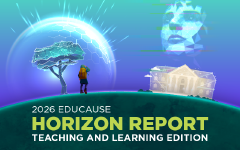
Society & AI Named in the 2026 EDUCAUSE Horizon Report on Teaching and Learning
An independent scholarly platform founded in July 2025, recognized in higher education's most influential annual report on the future of teaching and learning.
 Fundamentals May 13, 2026
Infrastructure as Curriculum: What Students Learn When AI Works Offline
A short paper arguing that when AI runs offline on local devices in classrooms, the infrastructural constraints themselves become pedagogically meaningful.
 Perspectives May 9, 2026
The Cultures That Calibrate AI
The responses AI systems produce as correct, appropriate, and helpful are not discovered — they are decided. This essay asks who does the deciding, and what gets erased in the process.
- Photo Stories April 25, 2026
Hyderabad Earth Day Photo Story, Day Three: Young Minds Present Cooler City Futures
The concluding photo story from Earth Month 2026 in Hyderabad, where learners presented their Cool Your City Challenge models, welcomed environmental advocates, and received awards for climate and biodiversity design.
- Photo Stories April 23, 2026
Hyderabad Earth Day Photo Story, Day Two: Pollinators, Heat Maps, and Cooling the City
A follow-up photo story from day two of Earth Month 2026 in Hyderabad, where children explored pollinators, real-time climate maps, and city-cooling design through collaborative art.
- Photo Stories April 23, 2026
Hyderabad Earth Day Photo Story: Learning From the Ground Below
A photo story from the opening day of Earth Month 2026 in Hyderabad, where children explored soil as a living system through observation, worksheets, magnifiers, and shared discussion.
- Fundamentals April 21, 2026
Beyond AI Literacy: Teaching Intelligence Management
A working paper arguing that education must move from AI tool use toward human authority, judgment, and accountability over AI systems.
 Perspectives April 8, 2026
Toward an Intelligence Management Curriculum
After reading Anthropic's Project Glasswing announcement, an AI in education researcher argues that the field is facing a genuine emergency: a frontier AI model now surpasses expert humans across software engineering, …
 Perspectives April 4, 2026
We Are Living in the Effects of a Cause We Never Authorized
Borrowing the causal invariance principle from physics, this essay argues that AI is producing a structural violation of causal order in society, displacing workers and restructuring cognition before any deliberate …
 Editorial April 2, 2026
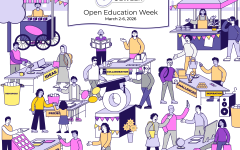
A Closing Note on Open Education Week 2026 at Society & AI
Six guest contributors joined Society & AI for Open Education Week 2026 — from classroom practitioners to policy researchers, across three countries and five disciplines. This is a brief reflection on what they brought, …
 Perspectives February 22, 2026
We speak of adapting to AI as though it is a natural force we must accommodate. But AI is built from human traces—and the question of who is shaping whom is far more complicated than we have allowed ourselves to ask.
- Research February 13, 2026
To Boldly Go Where Our Purpose-Built AI Had Not Gone Before
Teacher educators document how a purpose-built math bot evolved into a broader instructional co-designer through exploratory prompting.
 Perspectives February 7, 2026
The Case for Philosophical Intelligence
What happens when we stop asking machines to answer and start asking them to wonder? A case for philosophical intelligence as the next frontier beyond reasoning and world models.
 Perspectives January 31, 2026
Why cultural context, embodied wisdom, and the capacity to sense what machines cannot may define the most valuable form of intelligence in the age of automation
 Perspectives January 24, 2026
Examining how algorithmic systems discipline society—training populations to conform, punishing deviation, and reshaping behavior without consent.
 Commentary January 21, 2026
The Vanishing Ladder: Education in a Post-Labor Society
A commentary on the World Economic Forum 2026 debate between Google DeepMind's Demis Hassabis and Anthropic's Dario Amodei, examining urgent implications for workforce development and education
- Perspectives January 10, 2026
The Invisible Cost of Every Chat
AI companies warn us about accuracy—but remain silent on the environmental footprint of every query
 Perspectives January 2, 2026
Cloud Capital and the Extraction of Mind
How AI systems extract cognitive labor while accumulating capital for the few, and what this means for education and society
 Fundamentals December 20, 2025
The Learning Society Thesis: Why Education Is Humanity's Only Scalable Adaptation Technology
A foundational framework arguing that education, not tools, not resources, not institutions, is the mechanism through which human societies adapt to existential change. AI represents either the greatest amplifier or the …
 Fundamentals December 12, 2025
Is Education at a Punctuated Equilibrium?
When AI becomes the new blackboard: exploring the transformation of learning in an age of artificial intelligence
 Commentary December 6, 2025
When AI Gives Instant Answers, What Are We Really Learning?
A commentary on how generative AI in education challenges us to rethink what skills matter when knowledge is always at our fingertips.
 Commentary December 2, 2025
Brain Drain 2.0: The Invisible Extraction
Why the next great divergence won't be about who leaves, but what is taken.
 Currents December 1, 2025
AI, Education & Society: November 2025 in Review
A comprehensive worldwide review of significant developments in society-centered AI and AI in education during November 2025
- Perspectives November 23, 2025
Is the AI-Generation AI-Damaged?
A reflective inquiry into cognitive atrophy, educational purpose, and what it means to learn when generative systems can imitate thinking faster than human minds can produce it
 Fundamentals November 22, 2025
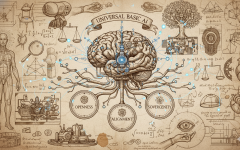
Why everyone deserves an AI companion aligned to their flourishing
 Insights November 19, 2025
Adopting and Adapting in AI Societies
Why education is the essential vehicle for navigating the age of artificial intelligence.
 Young Minds November 16, 2025
Building Confidence & Growth Mindset for Young Learners
A joyful song-based resource to teach young learners about confidence, perseverance, and growth mindset—aligned with Social-Emotional Learning (SEL) standards worldwide.
- Commentary November 16, 2025
Personality-Aware AI as a Design Imperative for Human-Centered Societies
A commentary on personality-informed AI design frameworks, examining the shift from universal usability to pluralistic AI ecosystems that adapt to psychological diversity
- Fundamentals November 16, 2025
How AI enables educators to create personalized, culturally responsive learning experiences through natural conversation
 Insights November 10, 2025
Promptgramming: A New Literacy for AI Societies
A companion piece to our 2024 technical report introducing promptgramming—the fusion of programming and prompting—as an essential literacy for navigating AI-mediated societies
 Young Minds November 6, 2025
Artificial Intelligence (AI) Explained for Kids
A joyful, song-based introduction to AI designed for young learners, educators, and families—crafted with Educator-in-the-Loop principles and Flesch-Kincaid readability standards.
 Perspectives November 5, 2025
The Rise of Algorithmic Societies: When Machines Govern Learning
How automated decision-making is reshaping education and what it means for human agency
 Research October 29, 2025
SHIELD-ing Education: When AI Works Without the Internet
On-device AI tutoring in rural India shows that equitable computing education does not require connectivity.
 Perspectives October 20, 2025
Preserving Wonder: The Role of Curiosity in AI-Mediated Learning Environments
Why efficiency-driven AI systems risk extinguishing the curiosity and wonder that fuel deep learning—and how we can design technology that preserves rather than suppresses intrinsic motivation
 Focus October 13, 2025
Mapping education as a complex adaptive system to identify AI leverage points
- Focus October 13, 2025
Systems & Complexity: The Research
Core concepts, system dynamics, and the methodology behind our systems-thinking research
 Blog October 11, 2025
Why improving SDG 4 accelerates progress on all SDGs
 Fundamentals October 10, 2025
A pragmatic definition of how people, institutions, and shared meaning organize collective life
 Fundamentals October 9, 2025
Society-centered AI extends human-centered design into collective, civic, and institutional contexts—positioning affected communities as co-designers, co-owners, and co-stewards of artificial intelligence systems. This …
 Blog October 8, 2025
Skills for a Regenerative Economy
Literacy, numeracy, climate and data competencies
 Blog October 8, 2025
A holistic metric suite for well-being in AI-integrated societies
 Perspectives October 7, 2025
Measuring Learning that Matters
Success metrics beyond standardized tests
 Fundamentals October 5, 2025
On World Teachers' Day: Why Society & AI Begins with You
A letter to the world's educators on the launch of the Society & AI.
 Fundamentals October 4, 2025
Mapping actors, feedbacks, and leverage points for change
 Focus October 3, 2025
Educational Equity as Leverage
Why quality education is humanity's meta-solution for addressing global challenges
- Focus October 3, 2025
Educational Equity: The Research
Access barriers, universal design frameworks, accountability levers, and measurement behind our educational equity work
 Fundamentals October 3, 2025
What Is Collaborative Intelligence?
Redefining knowledge as co-authored by humans and machines
 Perspectives October 2, 2025
Early-grade reading and math with equity-centered design
 Blog October 1, 2025
Cultural Evolution in AI Societies
How norms shift through tools, media, and networks
 Focus September 29, 2025
Human Flourishing in AI Societies
Preserving agency, meaning, and dignity as cognitive labor becomes automated
- Focus September 29, 2025
Human Flourishing: The Research
The five conditions of flourishing in full, the shifts education must make, and the policy that would institutionalize them
 Commentary September 27, 2025
AI and Education Beyond 2030: Mapping the Grand Challenges
Reflections on a collaborative research agenda defining four grand challenges for AI in education
 Focus September 26, 2025
How AI transforms knowledge creation, validation, and collaborative intelligence
- Focus September 26, 2025
Knowledge & Intelligence: The Research
Research streams, field evidence, and commitments behind our work on knowledge creation and collaborative intelligence
 Insights September 23, 2025
The Next Horizon of AI in Education Research: A Perspective
Exploring the paradigm shift in education research through AI
 Inquiry September 19, 2025
Guardrails for misinformation, attention, and civic participation
 Commentary September 14, 2025
Reframing AI ethics through Indigenous epistemologies, consent protocols, and data governance rooted in sovereignty and relational accountability.

Published Articles
- Research February 13, 2026
To Boldly Go Where Our Purpose-Built AI Had Not Gone Before
Teacher educators document how a purpose-built math bot evolved into a broader instructional co-designer through exploratory prompting.

Published Articles
 Perspectives July 16, 2026
Beyond Model Capability: The Pedagogical Singularity as Institutional Reorganization
Dr. Szymon Machajewski relocates the 'pedagogical singularity' from a threshold in AI capability to a threshold in institutional design, arguing that what determines whether human-AI coupling builds durable capability or …

Tamara N. Lewis Arredondo, Ph.D.
Society & AI Contributor · The Hague University of Applied Sciences
View full profilePublished Articles
 Insights March 27, 2026
Lecturer Development Requirements to Teach AI Literacy: Lessons from a European Student Survey
An instructional designer and researcher with the METACOG Erasmus+ project draws on survey data from 360 students across four countries to identify what lecturers must learn before they can meaningfully teach AI …

Published Articles
 Perspectives March 31, 2026
Beyond the Open-Weights: Open Education, the Global Compute Divide, and the Future of AI Literacy
Open AI is not truly open if schools, researchers, and communities lack the compute to run it. The next frontier for Open Education is equitable access to infrastructure, not just content.
Interested in Contributing to Society & AI?
We welcome guest contributions that offer critical, evidence-informed perspectives at the intersection of artificial intelligence, education, and society.
If you have a considered argument, reflection, or commentary that can strengthen public scholarship, we invite you to review our current contribution call.
Read the Call for Guest Contributions →