
Hyderabad Earth Day Photo Story, Day Three: Young Minds Present Cooler City Futures
The children did not treat climate change as a distant lesson. On the final day of the Hyderabad Soil to Sky: Cool Your City Challenge, they treated it as a design problem, a public argument, and a responsibility they were ready to hold in their own hands.
This concluding photo story follows day one, where learners studied soil as a living system, and day two, where they explored pollinators, heat maps, and city-cooling ideas. We write this final installment in the sequence of events that followed on Day 3 of the Earth Month 2026 activities, so readers can enter the session with greater clarity, depth, and attention to how the day unfolded. Day three brought those threads together through student presentations, environmental advocates, a judging rubric, awards, and a final recognition of the care that made the program possible.
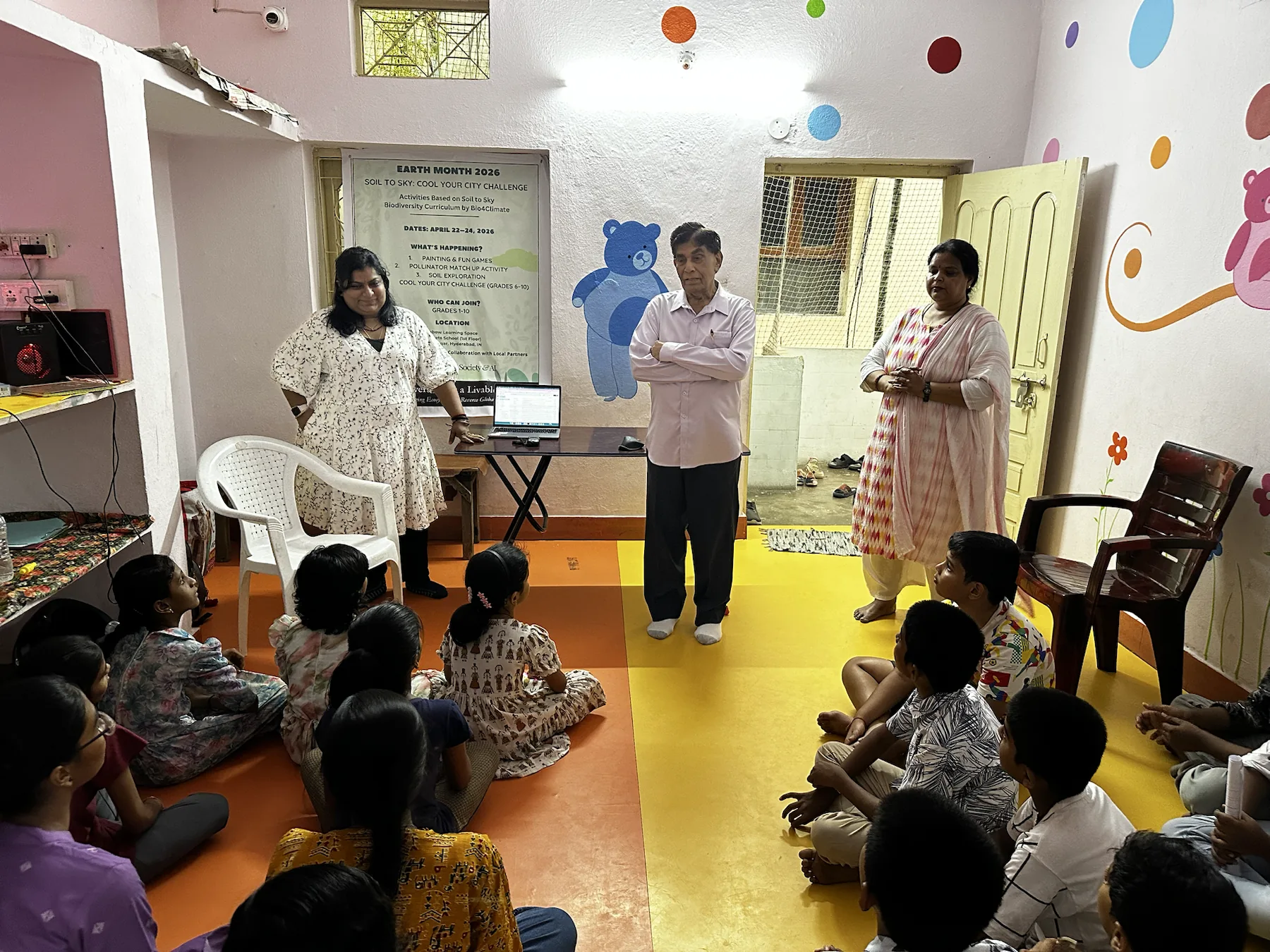
A local environmental advocate opens the final day
The concluding session began with a guest who helped connect the children’s work to a longer public tradition of environmental responsibility. Sri Maringanti Raghavachary joined in person as a local environmental advocate, retired government executive, and former headmaster. His presence mattered because the final day was not only a display of projects. It was an invitation for young learners to understand that ecological work belongs in civic life, public service, schooling, and everyday local leadership.
“We are only one among more than 8.7 million species on Mother Earth. Our responsibility is not merely to satisfy human desire, but to protect the living world that makes our own lives possible.”
Sri Maringanti Raghavachary
Raghavachary had also kindly provided soil samples for the earlier soil exploration activity, supporting the biodiversity curriculum work that shaped day one. That continuity gave the final session a useful arc: learners began by examining soil, moved through pollinators and heat maps, and ended by presenting their own practical ideas for cooler, greener cities.
From preparation to public presentation
Across the final session, four teams, each built around small groups of student participants, presented work they had developed from the day-two Cool Your City Challenge. The materials were simple: paper, clay, shells, colour, cardboard, craft supplies, and classroom tools. The intellectual demand was not simple. Each team had to explain what urban heat, biodiversity, shade, water, and plant life might mean for the design of a better city.
This was the point at which the three-day sequence became visible. The learners were no longer only observing soil or matching pollinators with plants. They were translating ecological ideas into public claims: plant more trees, stop cutting them, restore water into city spaces, build green roofs, create shaded roads, and treat nature-based solutions as infrastructure.
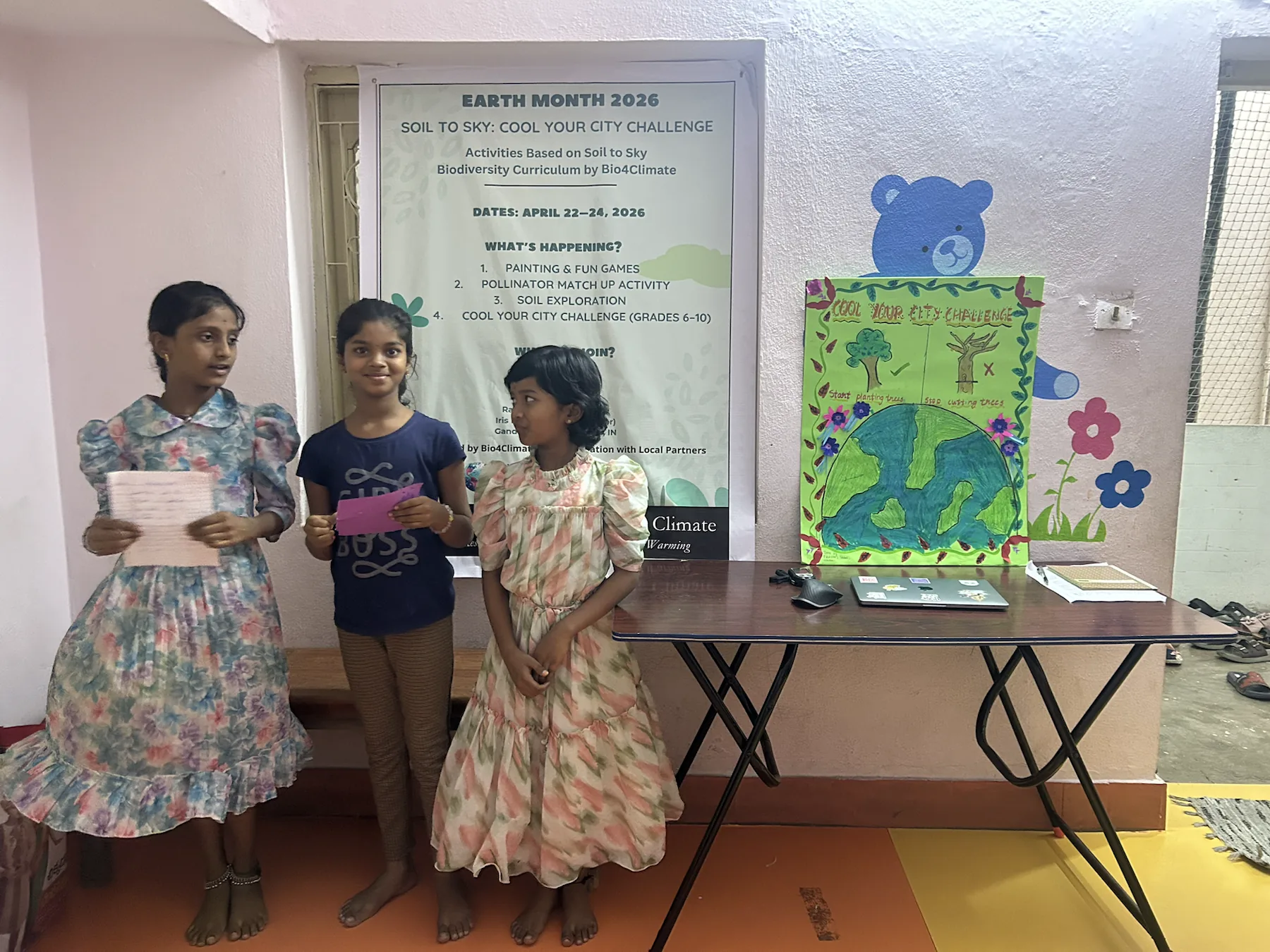
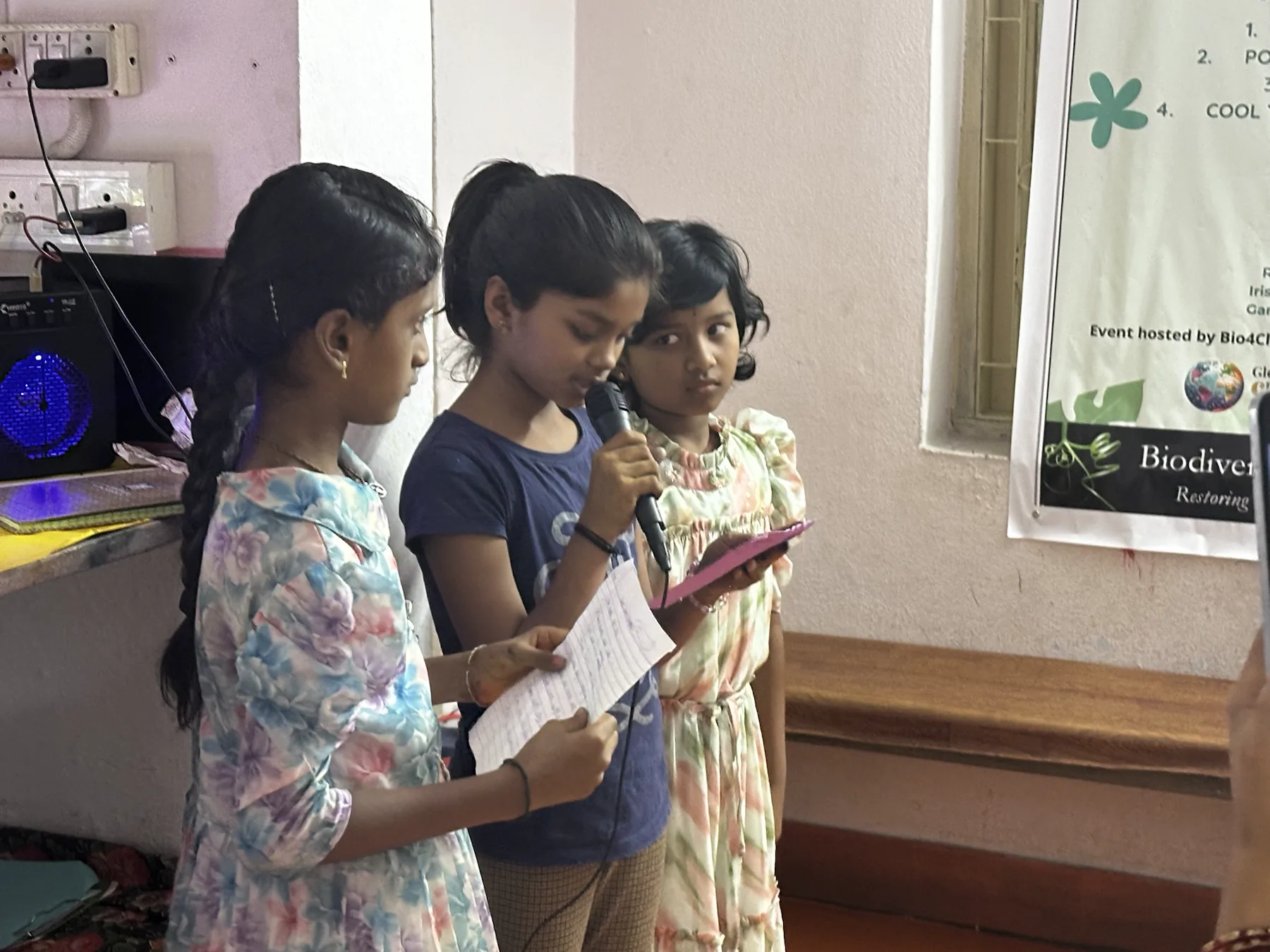
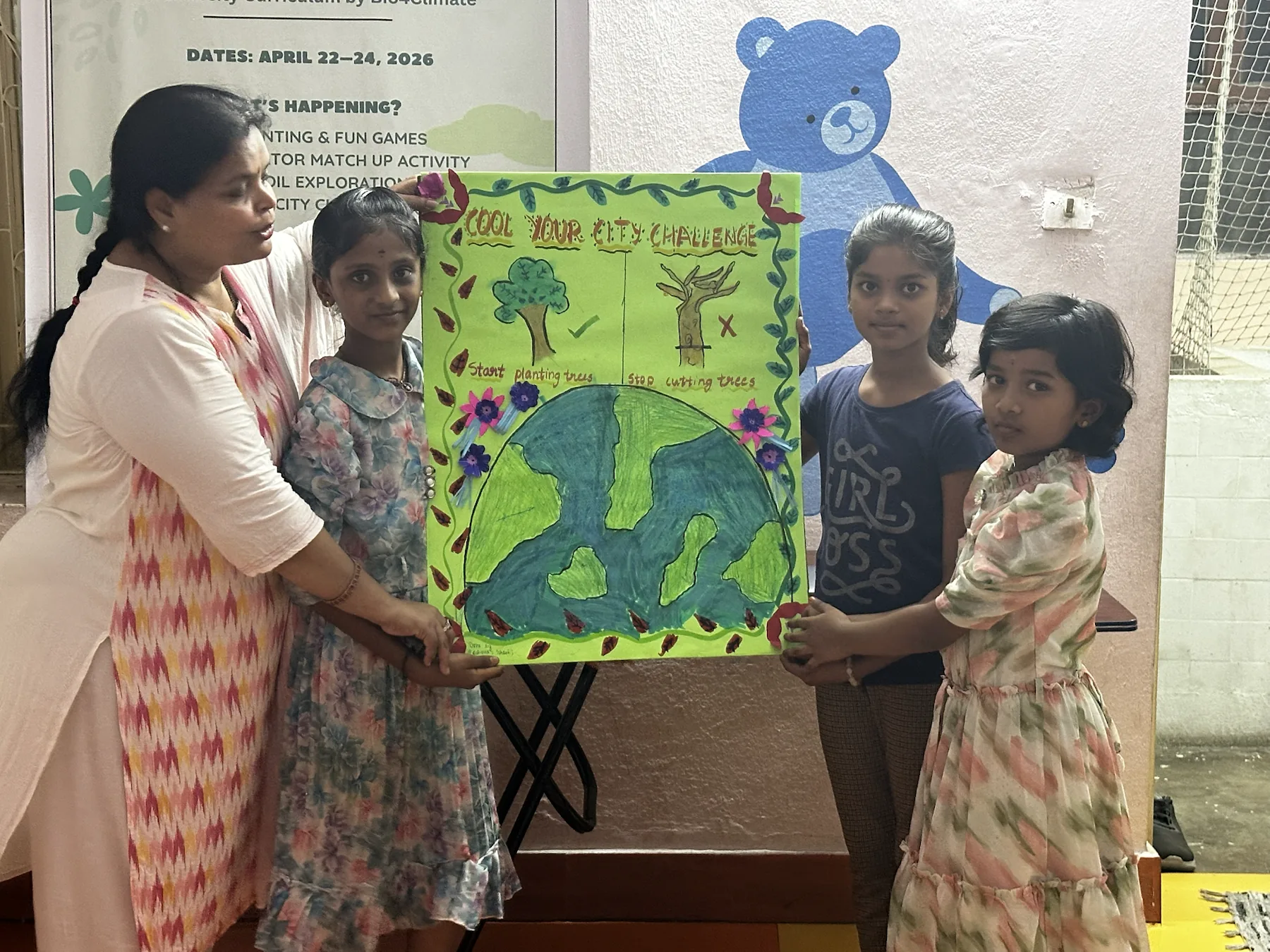
Team one: planting as public argument
Team one’s project centered on a direct and urgent message: plant trees, and stop cutting them. The team built its presentation almost entirely from the arts and crafts materials provided during the event. That mattered because the project did not depend on polished technology or expensive tools. It depended on the learners’ ability to turn available materials into a clear civic argument.
The group, drawn from early middle grades, framed tree planting not as decoration but as protection. In their presentation, the idea of the city was inseparable from shade, care, and restraint. A cooler city, in their account, begins with a decision adults and children can both understand: stop removing the living systems that make urban life bearable, and start planting the ones that make it possible.
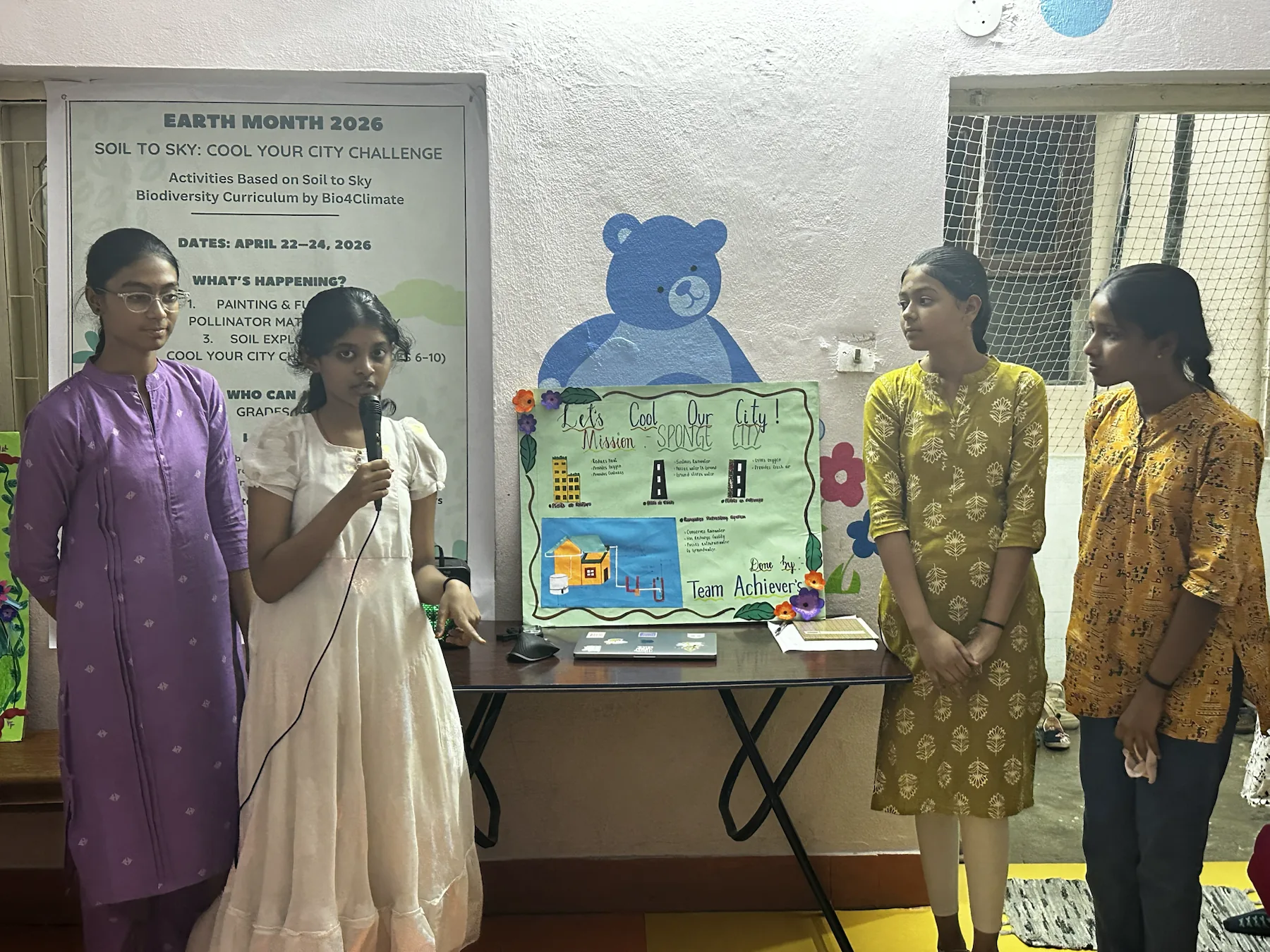
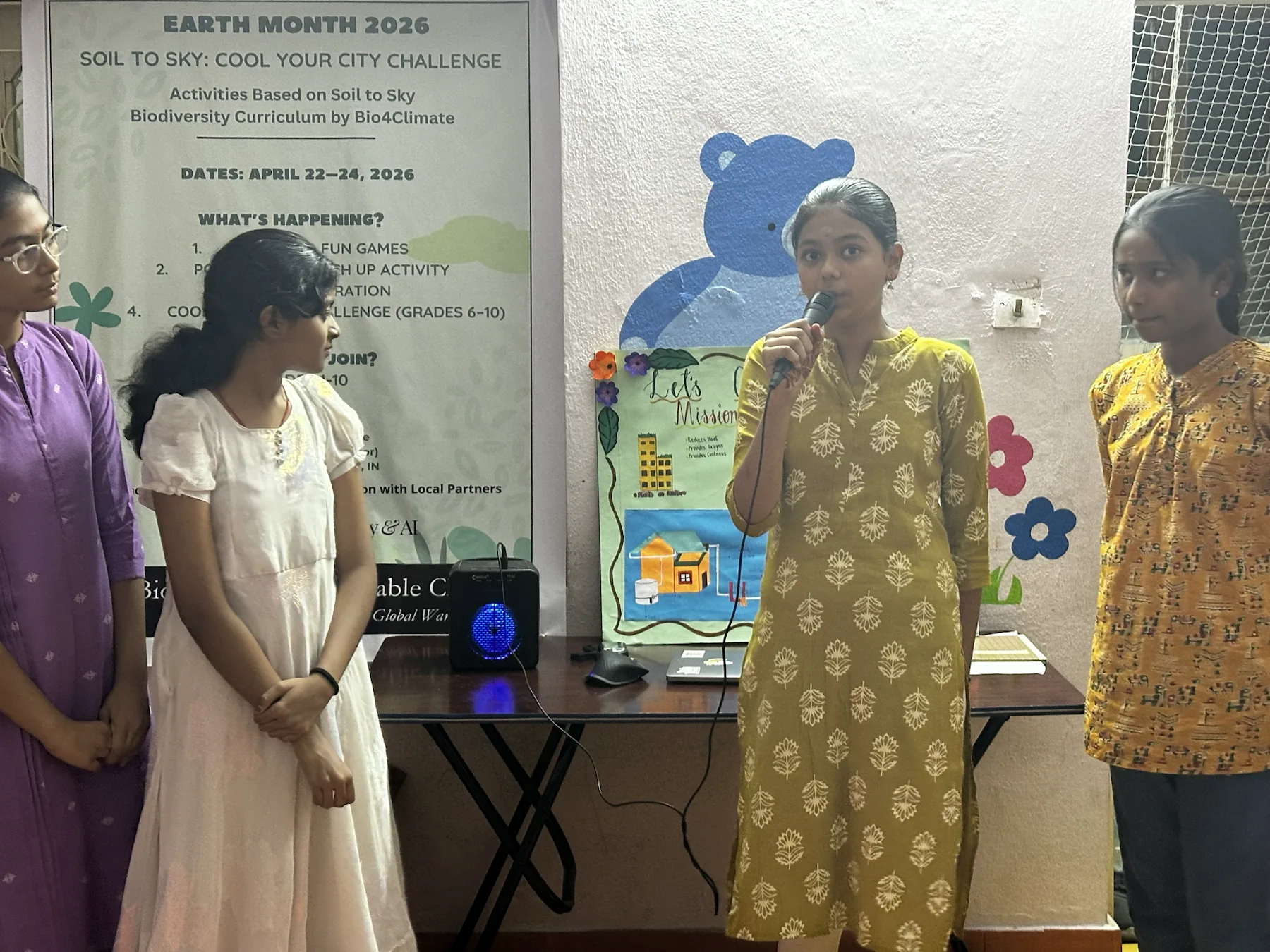
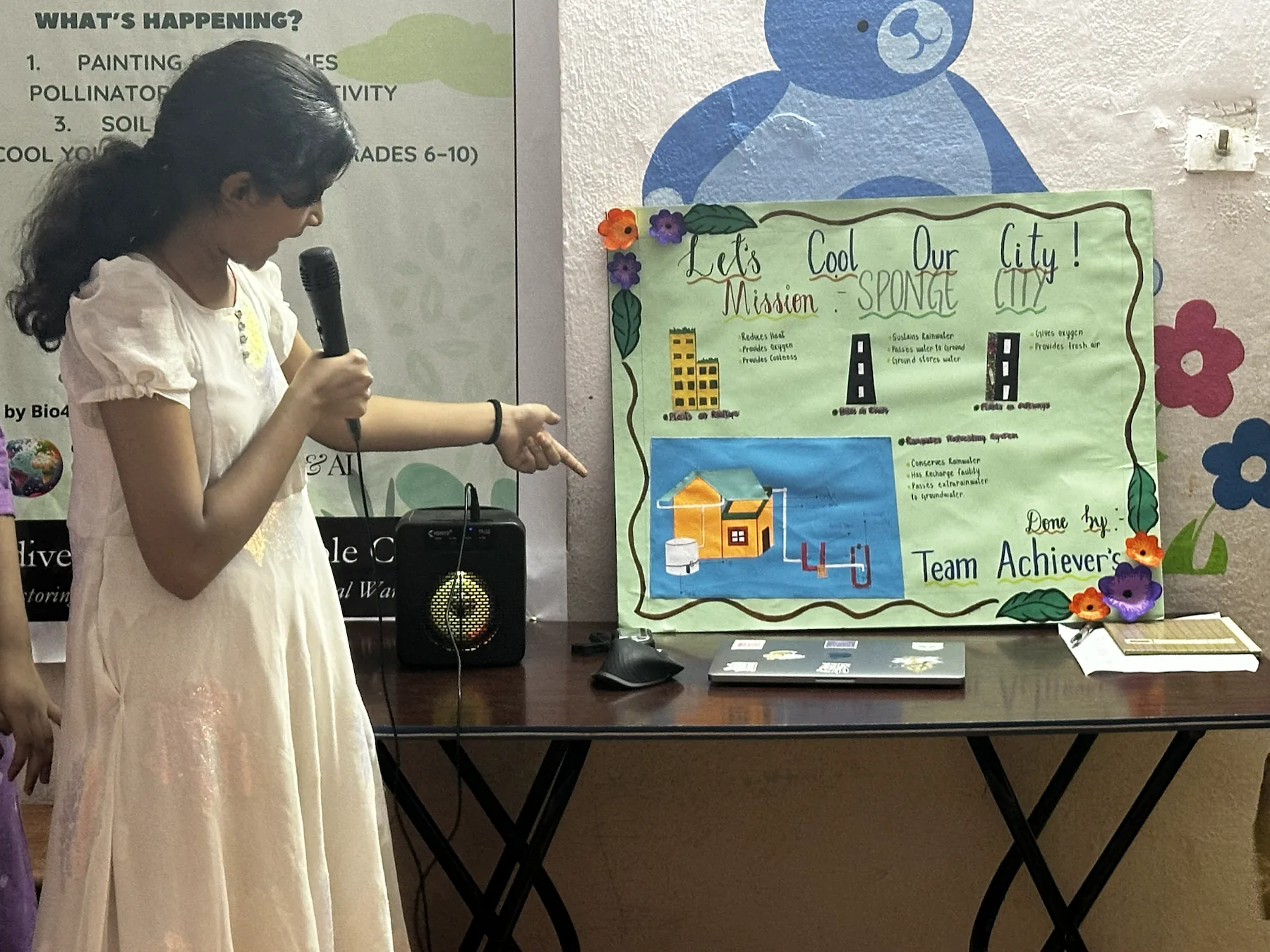
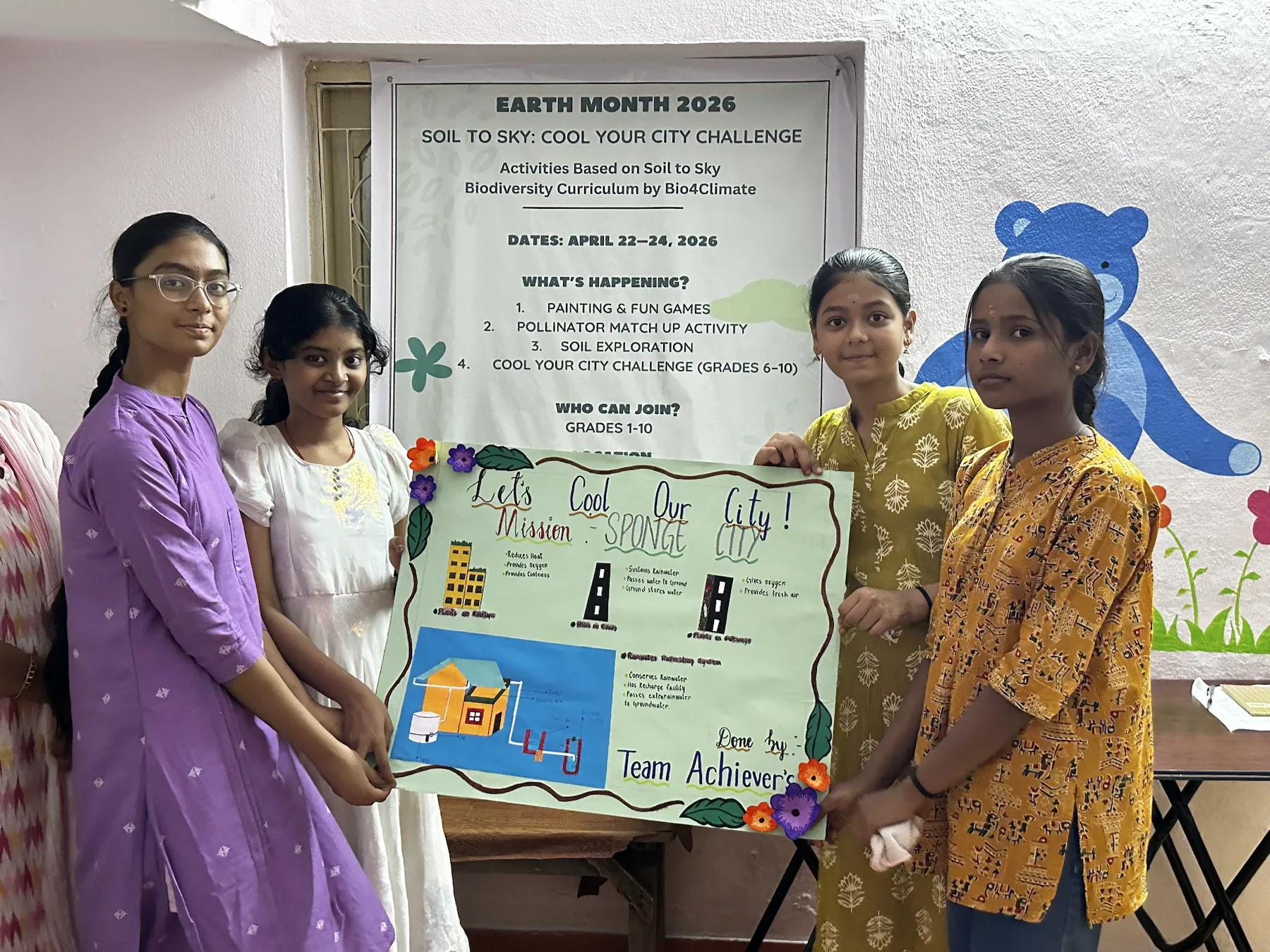
Team Achievers: Mission Sponge City
Team two presented under the name Team Achievers, with a project they called Mission: Sponge City. Their proposal moved beyond the familiar phrase “plant more trees” and began to imagine how cities absorb, hold, and share water. The team spoke about adding trees to buildings and rooftops, increasing greenery across built spaces, and making urban surfaces work more like living systems than sealed barriers.
The strength of the sponge city idea is that it gives children a systems-level vocabulary for urban resilience. Rainwater, shade, roofs, soil, plants, and human comfort all become connected. In the team’s model, cooling the city was not a single action. It was a pattern of design choices that could make buildings, streets, and neighborhoods more responsive to heat and water.
A remote guest joins from Virginia
As the student presentations continued, Beck Mordini joined remotely from Virginia, United States. Mordini is Executive Director of Biodiversity for a Livable Climate, bringing two decades of nonprofit experience across biodiversity protection, climate action, environmental law, community advocacy, and organizational leadership.
Her remote presence changed the room. The learners were visibly excited to show their projects to someone joining from another part of the world, and Mordini opened by congratulating the students on the work they had done. In that moment, the activity became more than a classroom presentation. The children could see their ideas traveling across distance and being taken seriously by an environmental leader outside their immediate setting.
Team three: clay, water, and a living garden
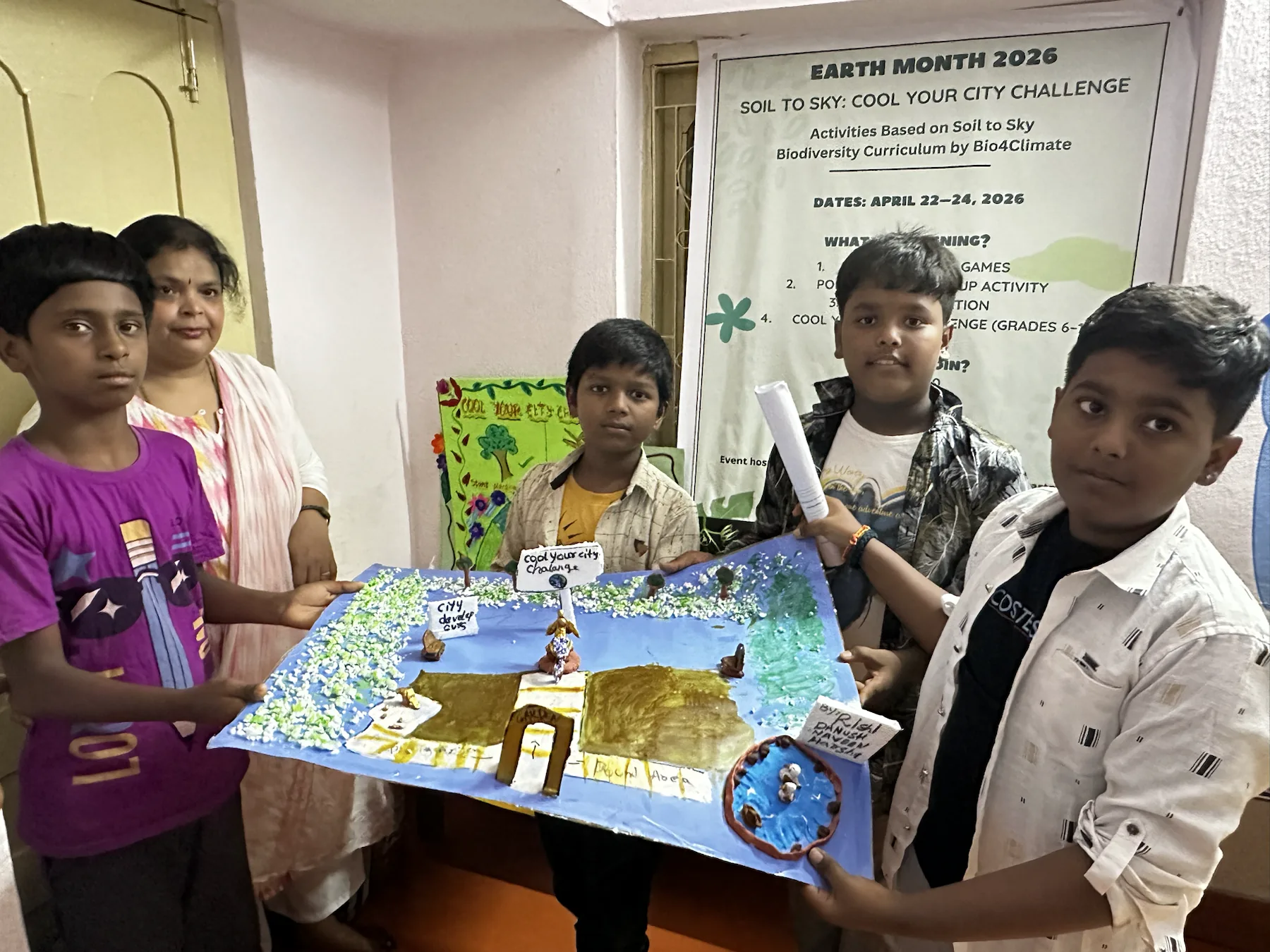

Team three began demonstrating its work after Mordini joined the session. Their project used clay and other naturally found, eco-friendly materials to model a garden with a pond, trees, and a small living landscape. The design was quiet but important: it treated cooling as something that emerges from relationships among soil, water, plants, and shade.
Clay gave the learners a tactile way to think about ecological form. A pond was not only a visual feature. It became a way to discuss water, habitat, cooling, and care. The garden model made the city feel less like concrete and more like a place that could hold life.
Team four: green roads, solar energy, and textured landscapes
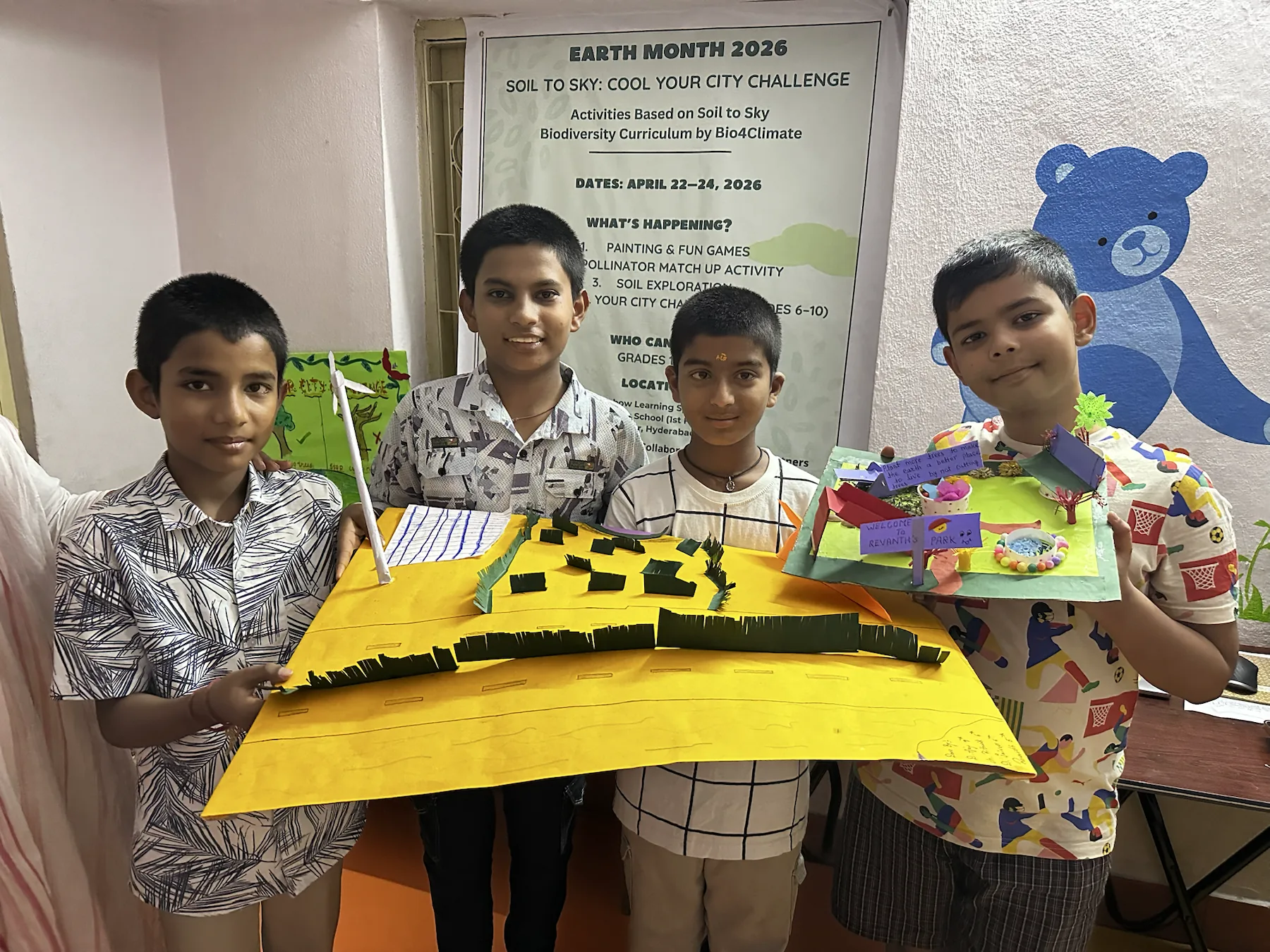
Team four presented two artifacts that imagined city roads divided by greenery, tree-filled dividers, and built features such as a solar panel. Their work suggested a city in which movement, energy, and biodiversity do not have to be separated. Roads can carry vehicles, but they can also carry shade, planted medians, and visual reminders that the built environment is never separate from climate.
The second artifact included a small pond, trees, and pistachio shells used as a tactile material within the project. Without overinterpreting the symbolism, the shells gave the model texture and a sense of organic ground cover. The project showed how children often reason through materials first, using what is available to represent soil, paths, water, shade, and planted life.
Judging the work with a rubric
After the presentations, we assessed the student projects using a rubric designed for the concluding challenge. The criteria included understanding of climate and biodiversity, creativity and design, use of nature-based solutions, clarity of presentation, teamwork and collaboration, and overall impact. Each criterion was scored on a 1 to 10 Likert-type scale.
The rubric was useful because it treated children’s projects with seriousness. It did not reduce the activity to a craft competition. It asked how well each team understood ecological problems, how clearly they communicated, how collaboratively they worked, and how thoughtfully they used nature-based solutions to imagine cooler cities.
| Recognition | Participants | Award |
|---|---|---|
| First prize | Samatha, Srija, Jahnavi, and Aaradhya | Mission: Sponge City; ₹2,000, approximately US$21.20, and certificates of excellence |
| Second prize | Ajay, Ritvik, Jaiveer, and Revant | ₹1,500, approximately US$15.90, and certificates of excellence |
| Third prize | Sai Dhanush, Naveen, Harshith, and Rishi | ₹1,000, approximately US$10.60, and certificates of excellence |
| Runner-up | Eeshani, Nikitha, and Sahasra | Gifts including stationery and colouring kits for each learner |
Younger early learners also received certificates of participation, recognizing that the program was not only about ranking final projects. It was about participation in a shared ecological learning space, from soil observation to pollinator thinking to the public presentation of ideas.
Recognizing the teacher who made the space possible
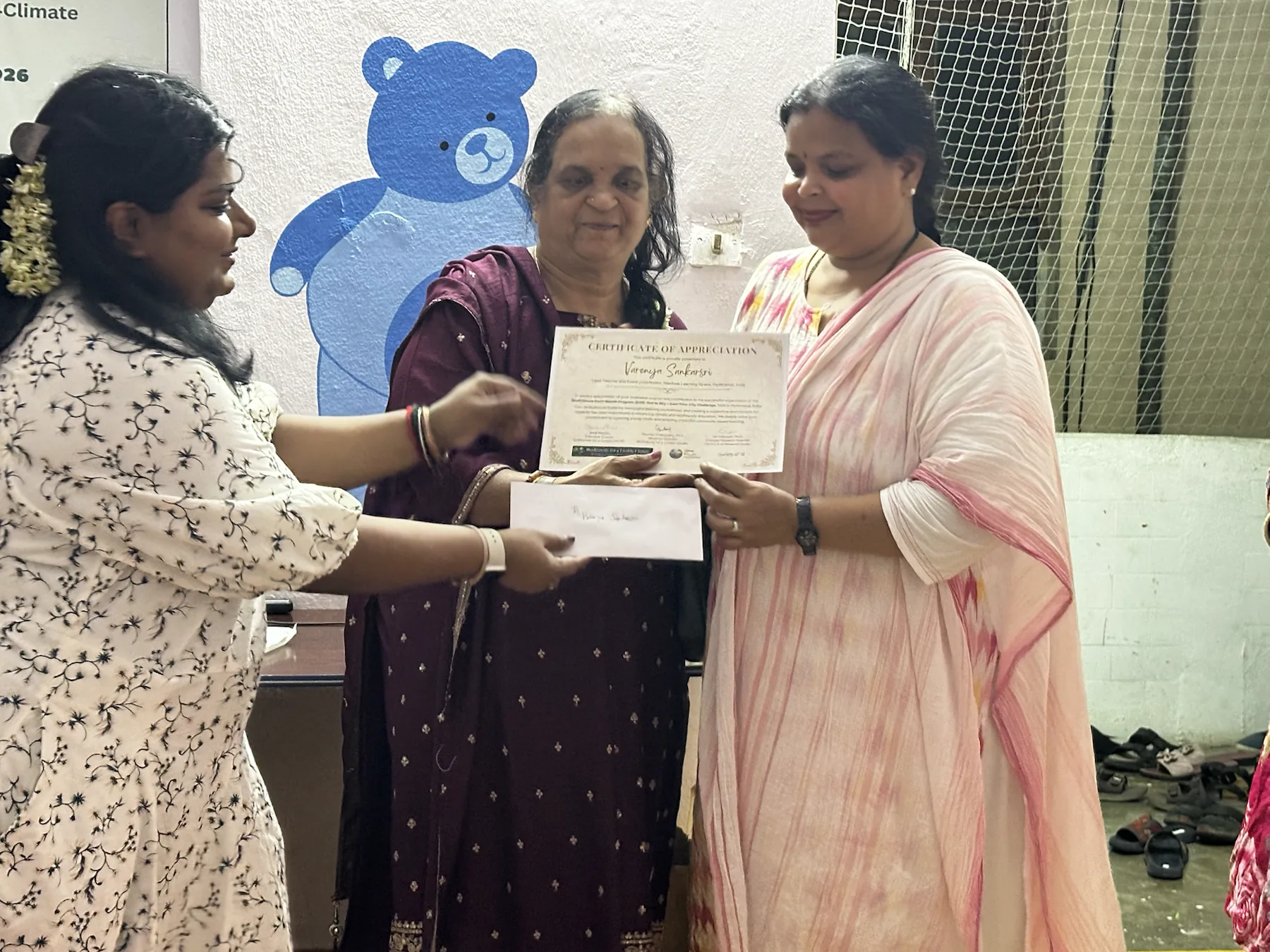
The event concluded by honoring lead teacher Varenya Sankarsri for her time, care, and coordination across the three-day program. Poulomi Chakravarty, Ph.D. and Sujata Gattupalli, the first author’s mother and steadfast education supporter, presented the teacher appreciation and incentive, recognizing the work required to make a community learning space feel orderly, welcoming, and intellectually alive.
Sankarsri received a certificate of appreciation and a teacher incentive of ₹2,000, approximately US$21.20. That recognition was important because educational work is sustained not only by curriculum and activities, but by the people who open rooms, gather learners, manage transitions, and make trust possible. Previously, in 2024, we collaborated with Sankarsri on a different educational initiative aimed at developing data science competencies in high schoolers.
Closing the three-day story
The final group photograph captured what the three-day sequence had been building toward: a room full of learners who had examined soil, played through ecological interdependence, studied heat, designed cooler city futures, presented their ideas, and received public recognition for their work.
The deeper conclusion is simple but demanding. Climate and biodiversity education should not ask children only to memorize a damaged world. It should invite them to observe carefully, reason together, build with their hands, speak in public, and imagine repair. In Hyderabad, across three days, the learners did exactly that.
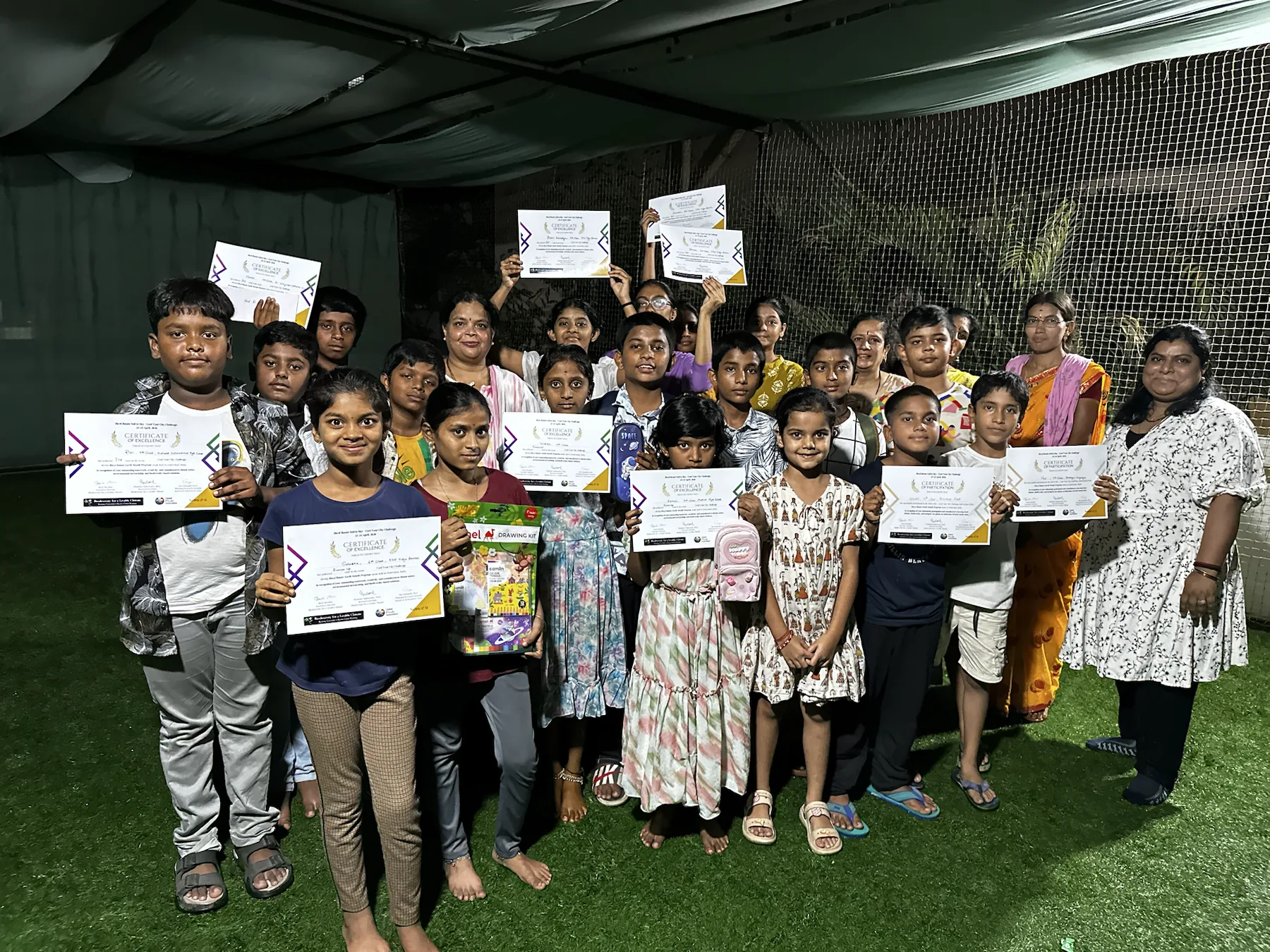
This final installment concludes the Hyderabad Earth Month 2026 photo story sequence, following the opening soil exploration on April 22, the pollinator and heat-map session on April 23, and the concluding Cool Your City Challenge presentations on April 24, 2026.
We are deeply grateful to every child who participated in this program. May your future decisions remain biodiversity-aligned, attentive to the more-than-human world, and courageous enough to protect the conditions of life itself. Society & AI is proud to have been a partner in this event.
Image credits: Sai Gattupalli, Ph.D.