
Hyderabad Earth Day Photo Story: Learning From the Ground Below
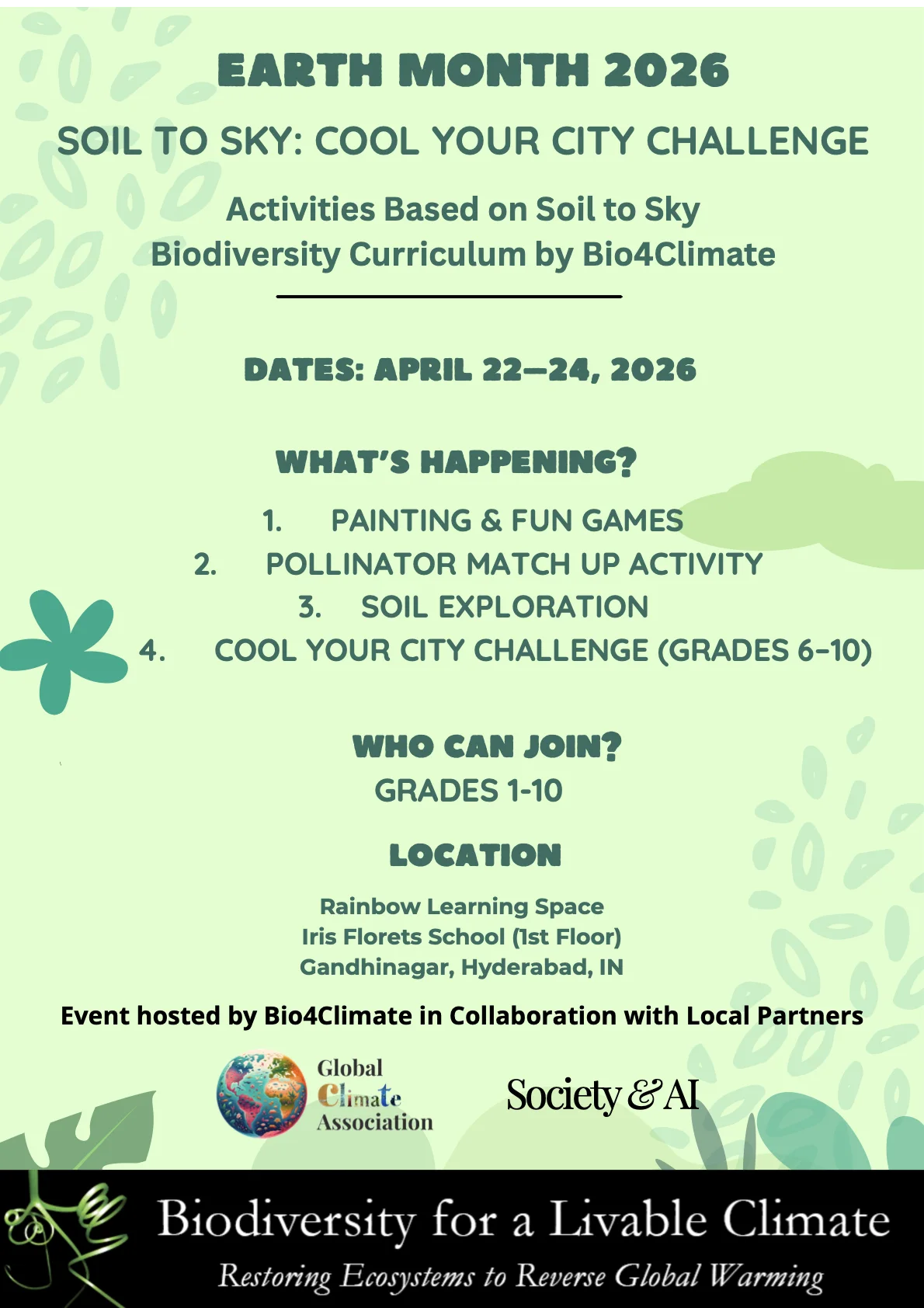
As part of Earth Month 2026, Society & AI joined Bio4Climate and the Global Climate Association in Hyderabad, India, for the opening day of Soil to Sky: Cool Your City Challenge, a three-day youth program on climate, biodiversity, and nature-based urban cooling.
Society & AI's interest in this work is not incidental. We view climate literacy, environmental observation, and community-based inquiry as part of a broader scholarly commitment to how knowledge is formed, shared, and lived in public. When children are invited to study soil, pollinators, shade, and biodiversity as interconnected systems, they are not merely learning facts; they are practicing forms of attention and reasoning that matter for democratic, ecological, and educational futures.
An unexpected welcome
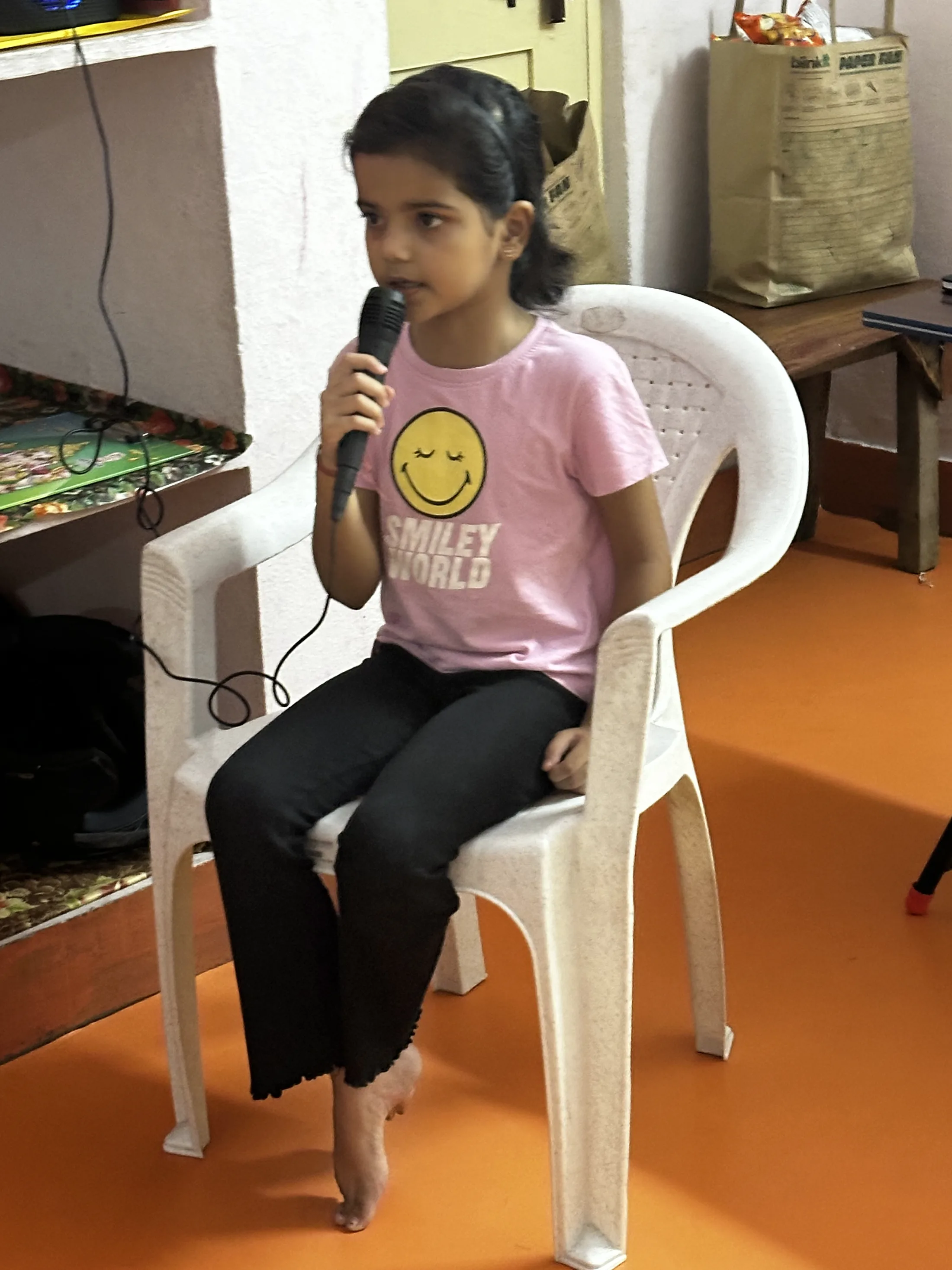
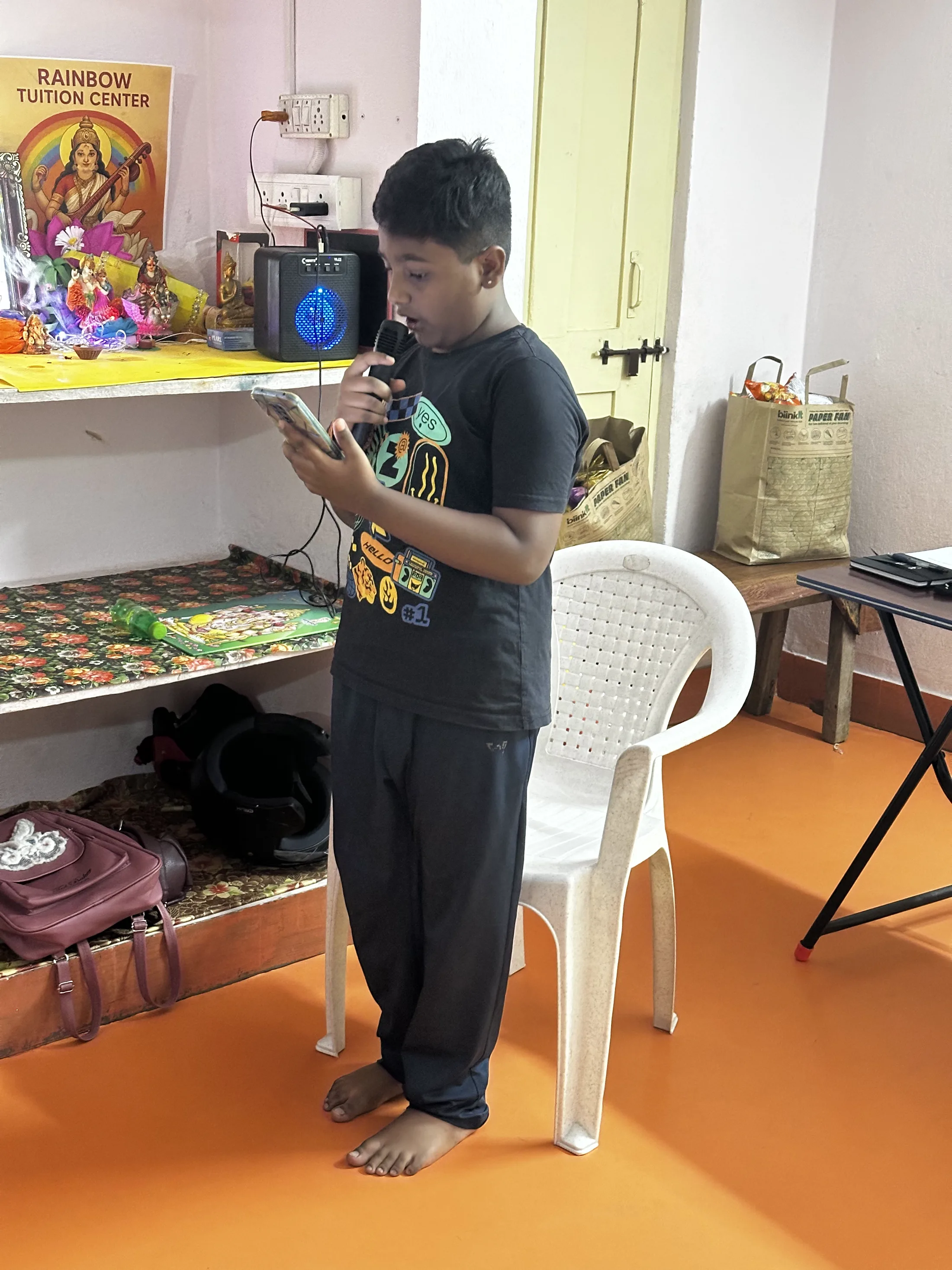
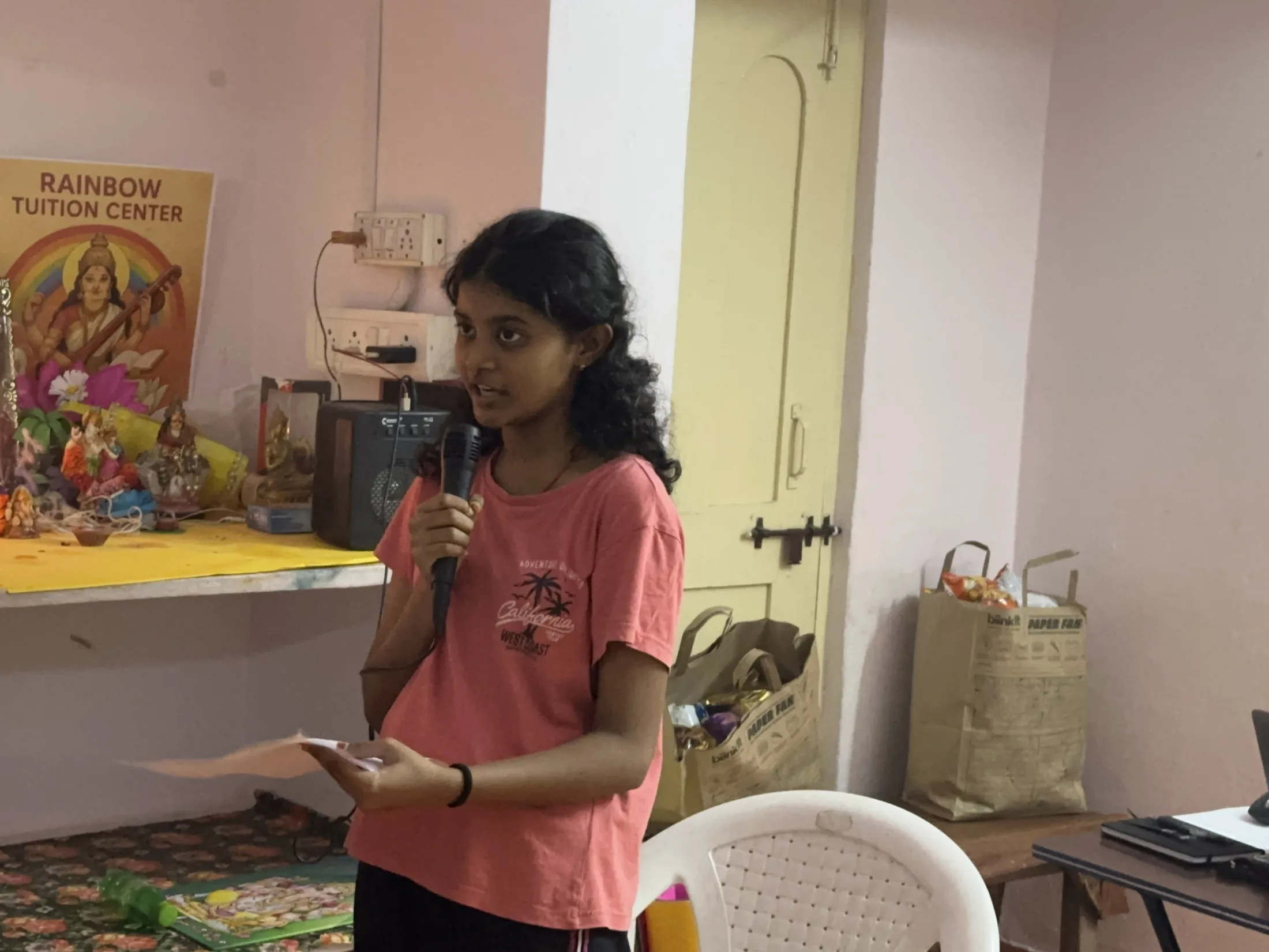
Day one began with an unexpected act of leadership. Before the formal activities were underway, three young participants stepped forward to welcome the group and invite their peers into the Earth Month program. That moment subtly reset the tone of the day: this would not be a top-down lesson delivered to children, but a shared learning space in which children themselves could set the terms of participation, curiosity, and public voice.
A three-day frame for ecological thinking
The Hyderabad program adapts Bio4Climate’s Soil to Sky biodiversity curriculum to a local educational setting, bringing together younger and older learners around a shared proposition: cities become more livable when biodiversity is understood as infrastructure rather than ornament. The larger event includes painting and games, pollinator learning, soil exploration, and a city-cooling design challenge for older students. On day one, the emphasis centered on orientation and on the living systems beneath the ground.
We are especially grateful to lead teacher Varenya Sankarsri, whose generosity and careful coordination helped make the Hyderabad session possible. Her support in arranging the learning space and welcoming the children gave the program the warmth, order, and trust that meaningful community-based inquiry depends upon.
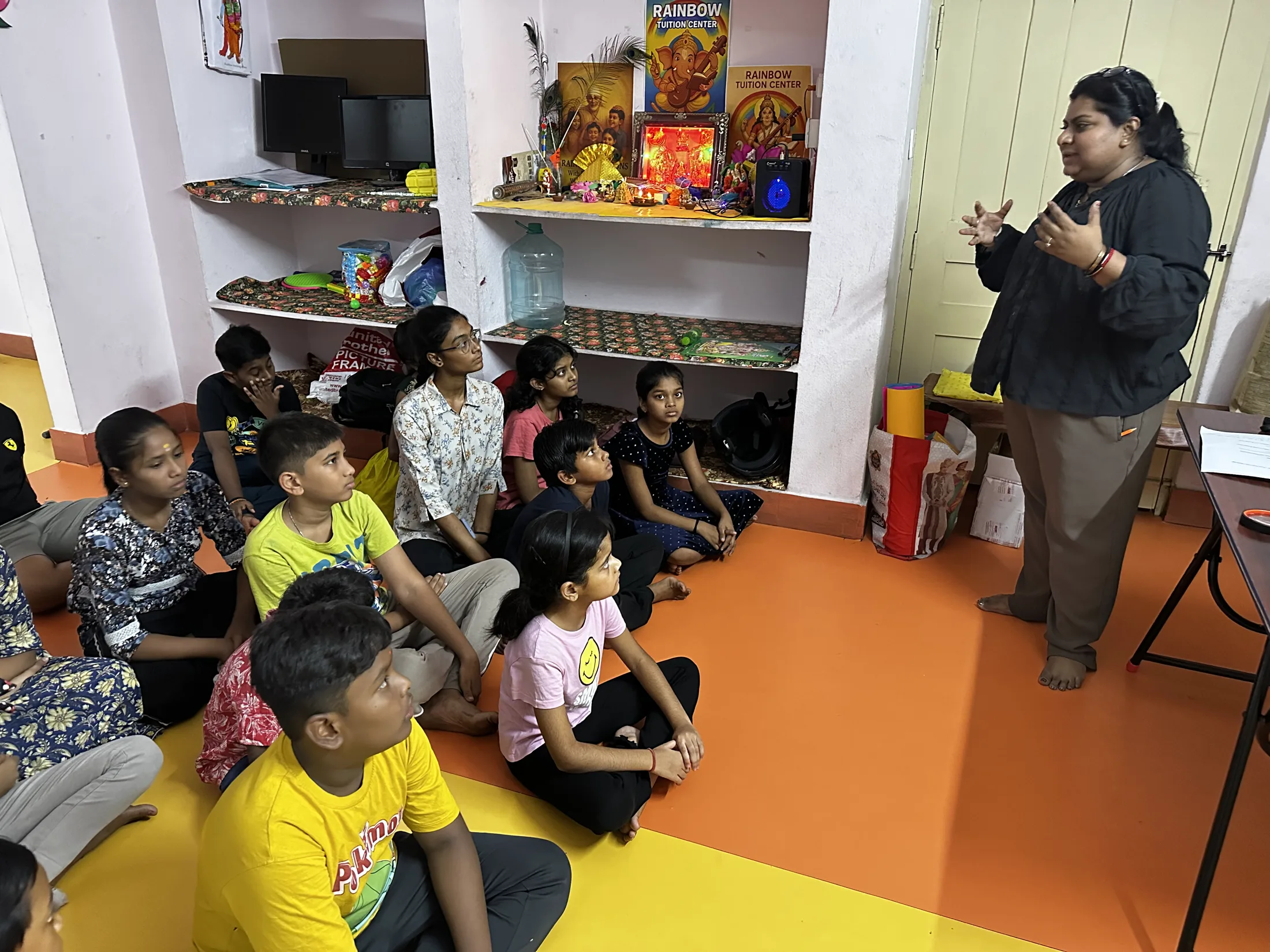
Introducing soil as a living system
The instructional core of the first day was led by Poulomi Chakravarty, Ph.D., a climate and environmental scientist, Research Advisor at Bio4Climate, and advisory member of Society & AI whose work bridges climate literacy, biodiversity education, and public understanding. The framing question was deceptively simple: what lives in soil, and what happens when soil is dry, degraded, or cut off from the wider web of life above it?
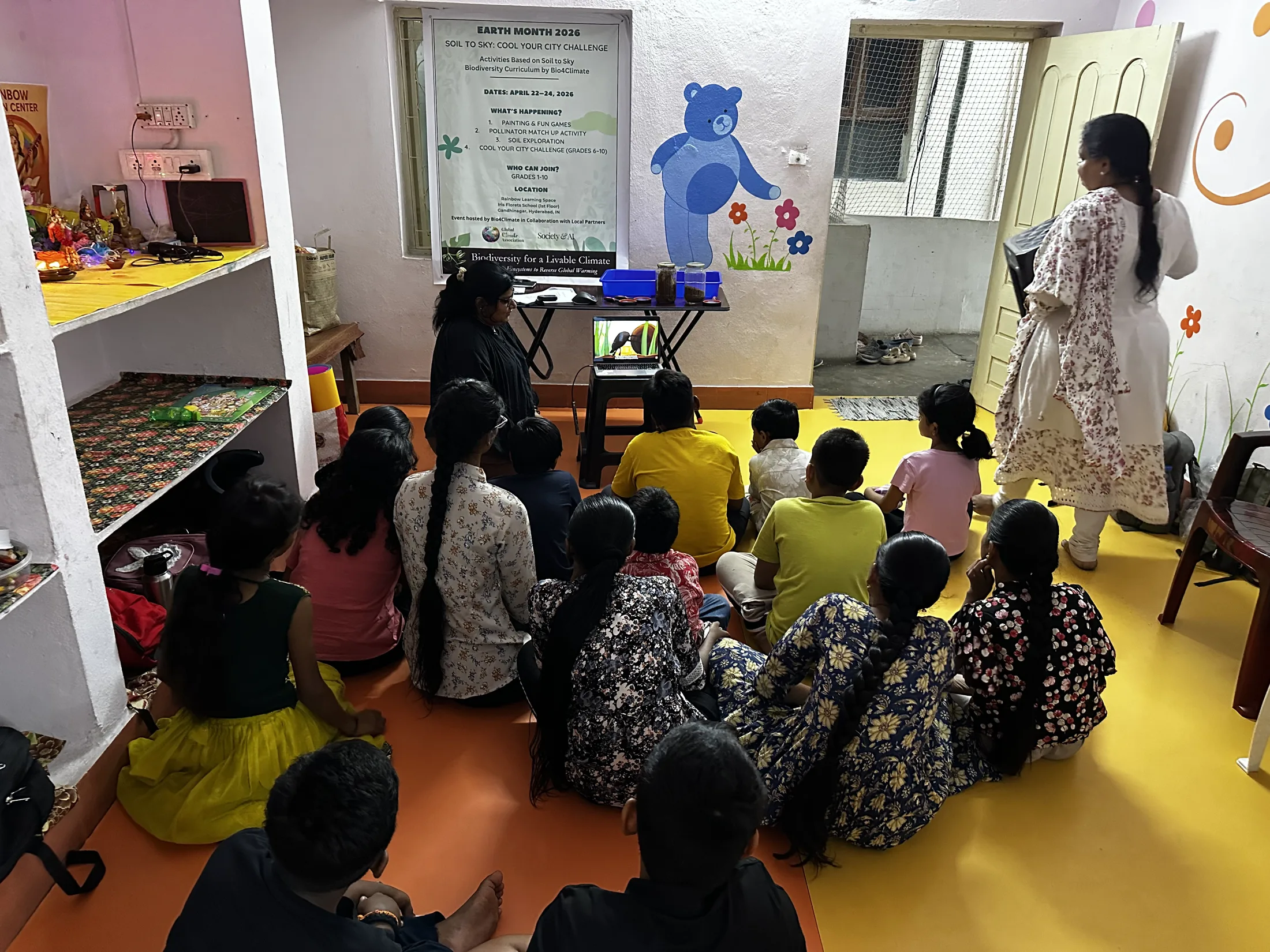
Students worked with soil exploration worksheets developed for the session, documenting what they observed and what they inferred. They wrote down traces of leaves, roots, stones, insects, and moisture; they drew what they found; and they reflected on questions such as whether soil is alive, what living things do within it, and what might change if soil becomes unhealthy. In pedagogical terms, the worksheets mattered because they turned attention into evidence. The activity moved beyond spectacle and into disciplined noticing.
Observation, magnification, and evidence
Once the exploration began, children moved from listening to close looking. Soil samples had been collected in advance so that learners could examine texture, roots, fragments of plant matter, and small traces of life with magnifying glasses. The practical structure was simple, but its intellectual work was substantial: it asked children to treat the ground not as inert matter, but as habitat, process, and climate infrastructure.
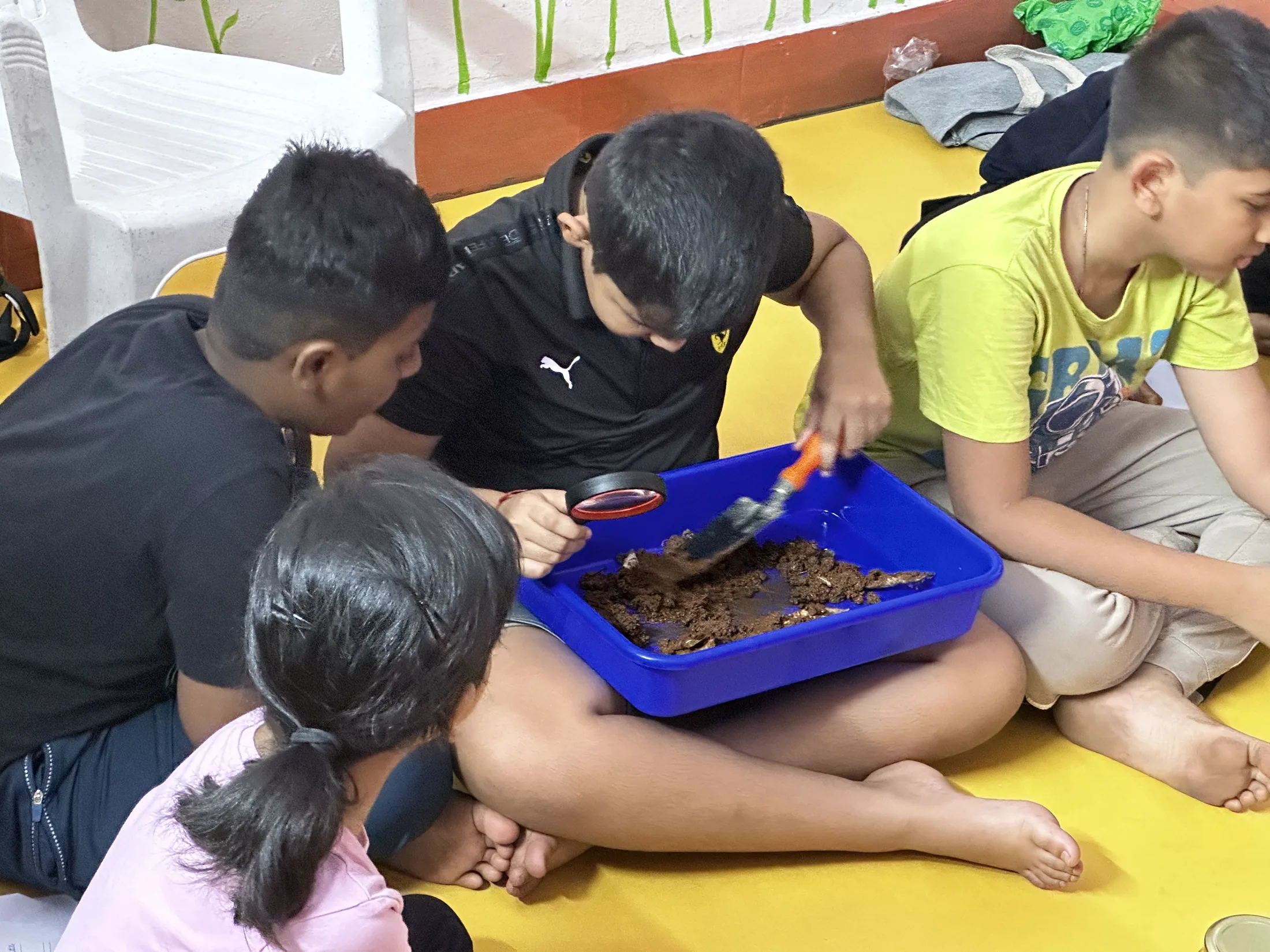
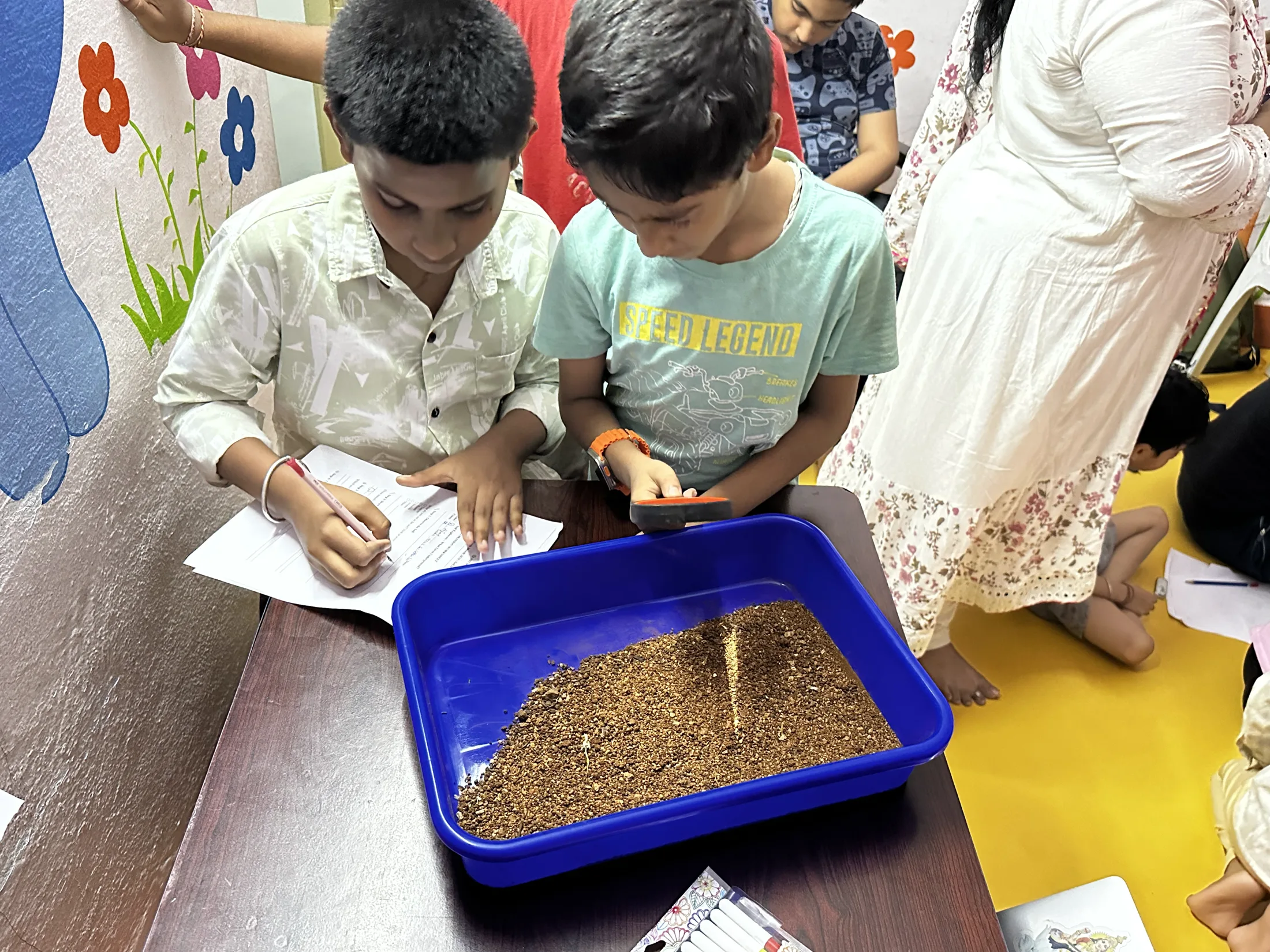
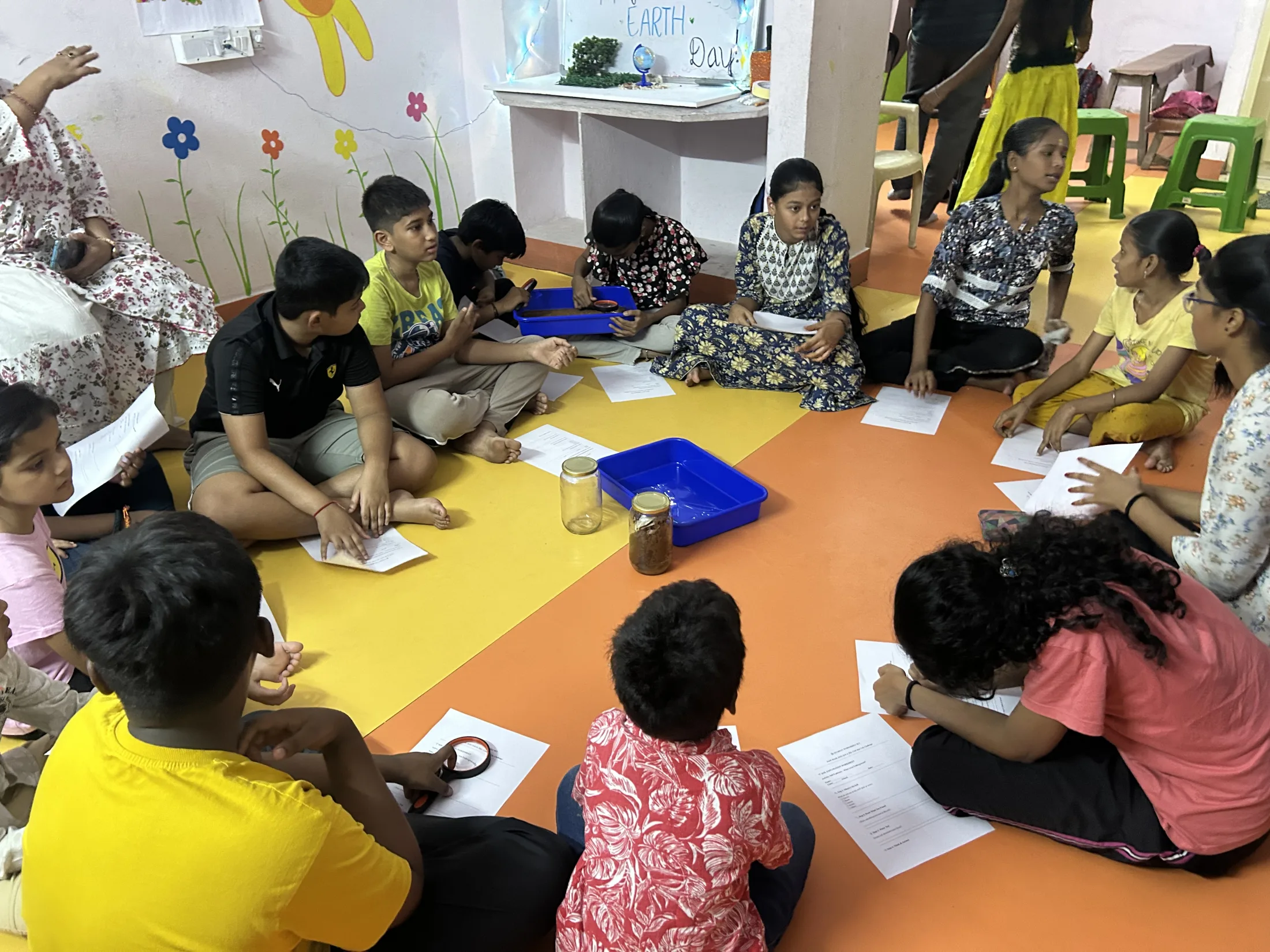
Across these interactions, the children reflected on what soil holds, what living things depend upon it, what changes when it becomes dry or unhealthy, and why these observations matter for shade, growth, cooling, and life in their own surroundings. The session asked them not merely to observe, but to interpret, connecting what they saw in the soil to wider ecological relationships in the world around them.
Closing day one
The first day closed with collective energy still intact. The session ended not as a finished unit, but as the opening chapter of a longer sequence that will continue across the remaining Earth Month activities in Hyderabad. More photo stories will follow as the program unfolds.
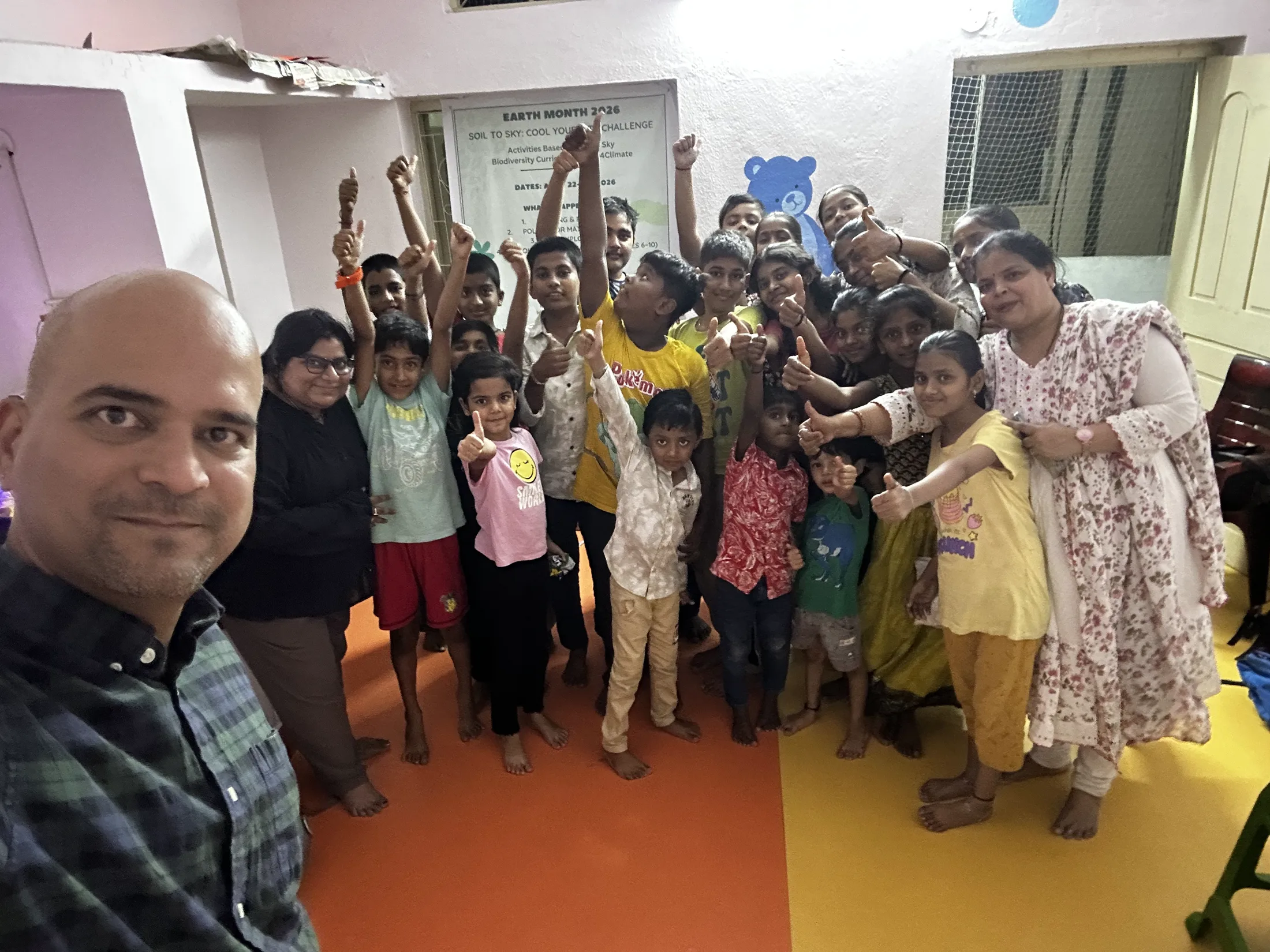
This photo story documents only the first day of the Hyderabad program. Subsequent installments will follow the continuing activities across April 22 to 24, 2026.