
Hyderabad Earth Day Photo Story, Day Two: Pollinators, Heat Maps, and Cooling the City
We are reporting on day two of activities as part of Earth Month 2026, which we are organizing in an afterschool learning space in Hyderabad, India, together with our collaborators at Bio4Climate and the Global Climate Association. This second session moved from soil-based inquiry toward pollinators, urban heat, and children's own design proposals for cooler cities.
In our previous photo story, we reported on the learning children experienced during the opening day of the Hyderabad program. This follow-up installment documents how day two expanded that inquiry: first through a pollinator-matching game about ecological interdependence, and then through a city-cooling challenge grounded in real-time climate maps, collaborative discussion, and student-made visual work.
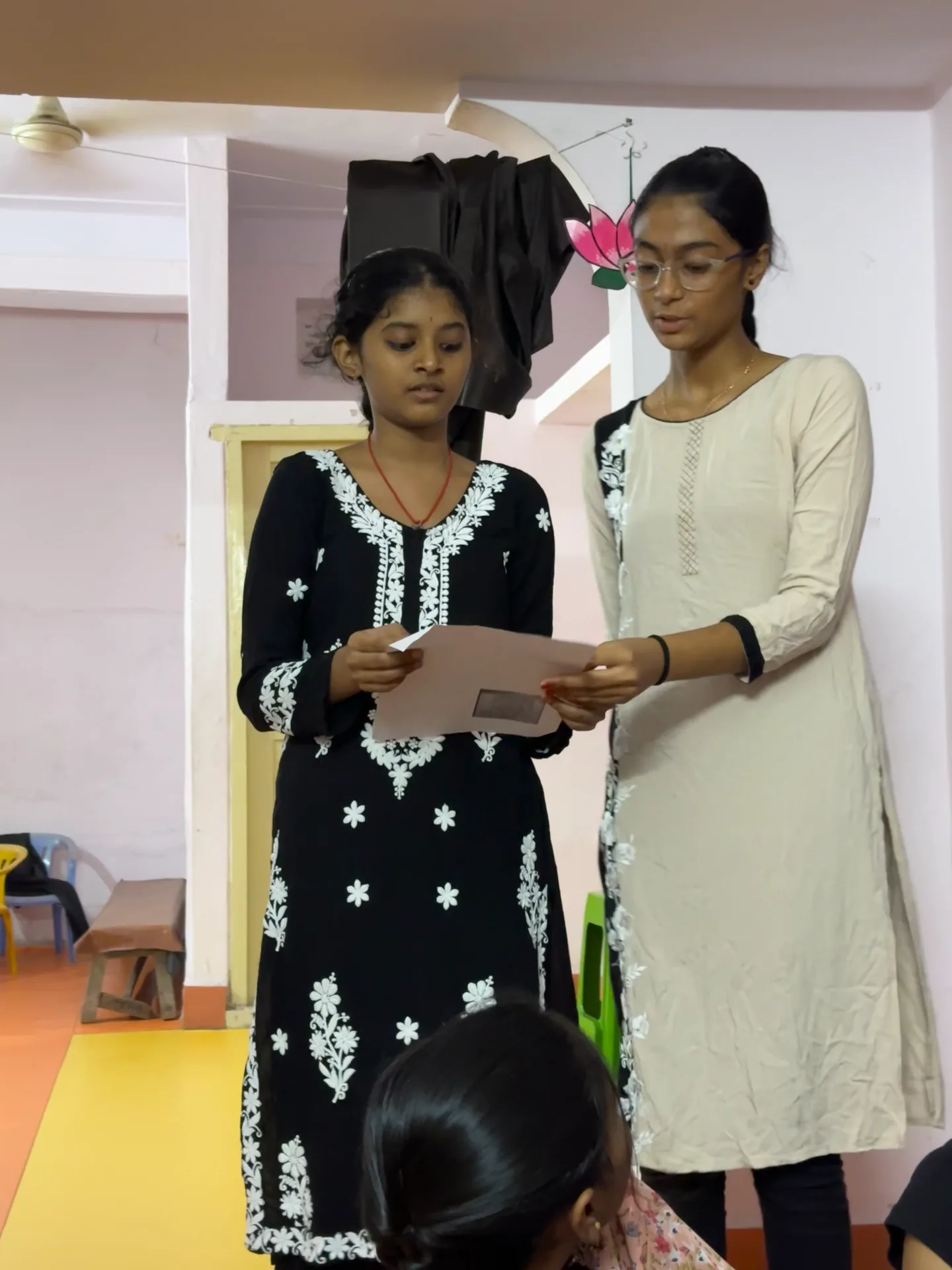
Returning for day two
Day two began with another welcome speech by young participants, affirming a pattern that has become central to the Hyderabad program: children are not merely recipients of environmental instruction, but active public participants in the making of the learning space itself. That matters pedagogically. When children help open the session, they also help define its tone, its seriousness, and its sense of shared purpose.
The larger frame remained the same as on the opening day. This is part of our Earth Month 2026 programming in Hyderabad, India, organized in an afterschool setting where climate literacy, biodiversity education, and creative inquiry can be brought into direct conversation with one another. What changed on day two was the mode of attention. Instead of looking downward into soil as a living system, participants turned toward pollinators, urban heat, and the practical question of how cities might be made cooler and more livable.
Situating the challenge through live climate maps
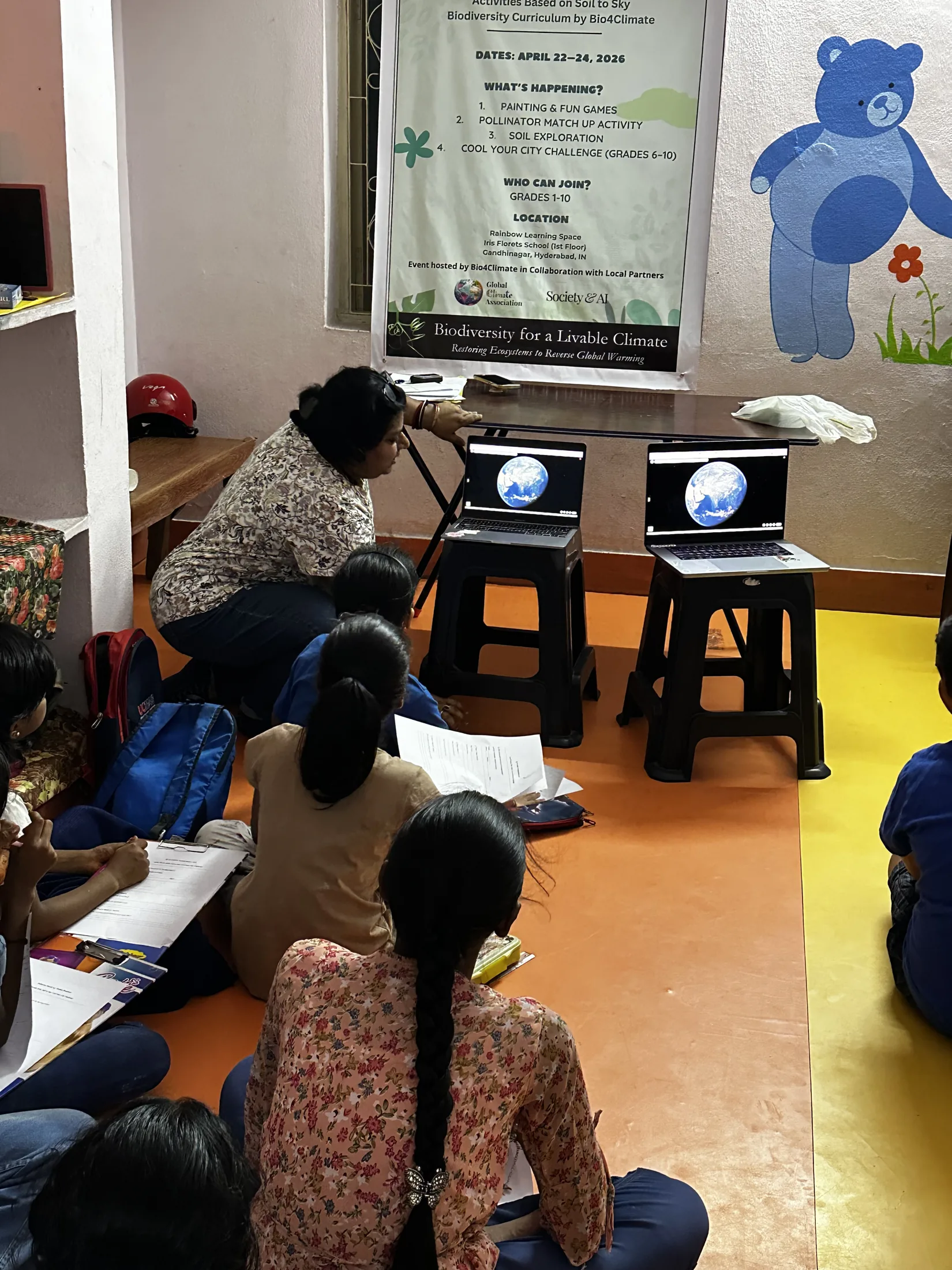
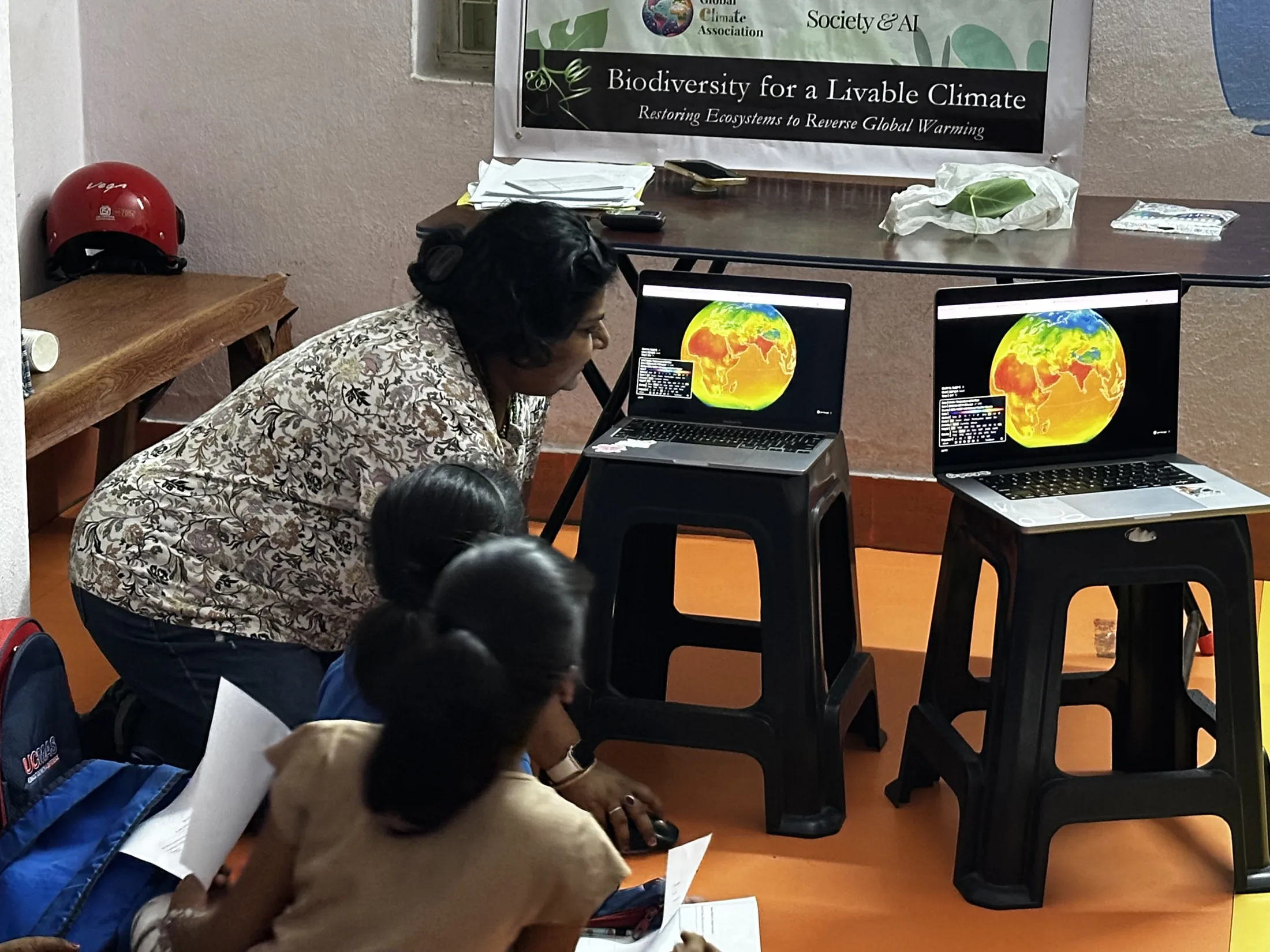
Before the main design activity began, Poulomi Chakravarty, Ph.D. introduced the children to several interactive, real-time maps showing global temperature patterns and related Earth-system dynamics. This was more than a technical demonstration. It gave the children a way to situate their local learning within a wider planetary frame, helping them see that the question of cooling a city is not an isolated art exercise, but part of a broader problem of climate, heat, exposure, and ecological design.
The maps provided a powerful visual grounding for the Cool Your City Challenge. In particular, the strong heat signatures visible across India helped make the issue concrete. The children could see that the problem was not abstract and not somewhere else. It was regional, immediate, and connected to the kinds of urban environments in which they themselves live, move, and learn.
The Pollinator Matchup Game
One of the two planned activities we hosted on day two was the Pollinator Matchup Game. The structure was simple, but intellectually rich. Some children received cards representing pollinators such as bees, butterflies, moths, and flies. Others worked with cards representing flowering plants, trees, or ecological conditions. By reading the clues on the reverse side of each card, they had to infer which living relationships belonged together.
That task invited the children to think relationally rather than categorically. A bee is not meaningful in isolation from flowers. A flowering tree is not fully understandable without the insects and other agents that help it reproduce. Even the imbalance cards in the deck, such as a hungry bee without flowers or a blooming tree without pollinators, were useful because they showed that ecological breakdown can be understood through missing relationships. In classroom terms, the game translated biodiversity into a logic of interdependence.
To make that activity shareable beyond this single session, we are releasing the deck here as an open educational resource. The classroom game necessarily simplifies a larger ecology into teachable pairings, but that simplification is useful: it gives younger learners a concrete way to understand that plants, insects, and urban life are tied together through mutual need rather than loose association.
Click either card to flip it and read the clue on the back. Press Match and watch the deck cycle through possibilities before locking onto the correct ecological pairing.
Pollinator Allies
Honey BeeDaytime pollinator
Pairs insects and plants through bloom time, color, scent, pollen, and ecological dependence.
Bloom and Habitat Partners
SunflowerBright pollen-rich flower
Honey Bee matches with Sunflower: the flower is rich in pollen, and the bee is an active daytime visitor that helps make those blooms meaningful.
We are sharing the complete printable deck as an open educational resource: download the Pollinator Matchup cards (PDF).
Designing a cooler city
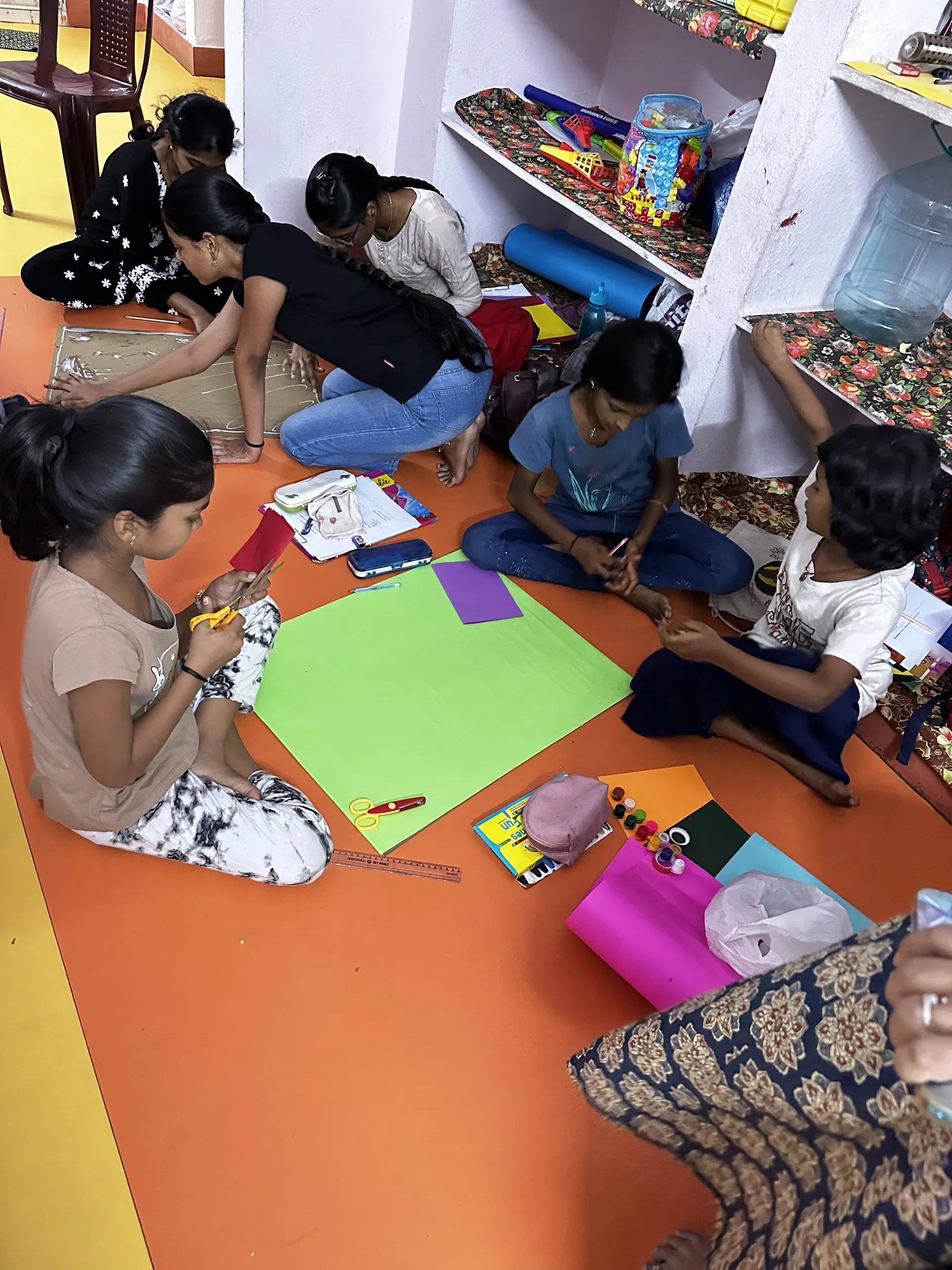
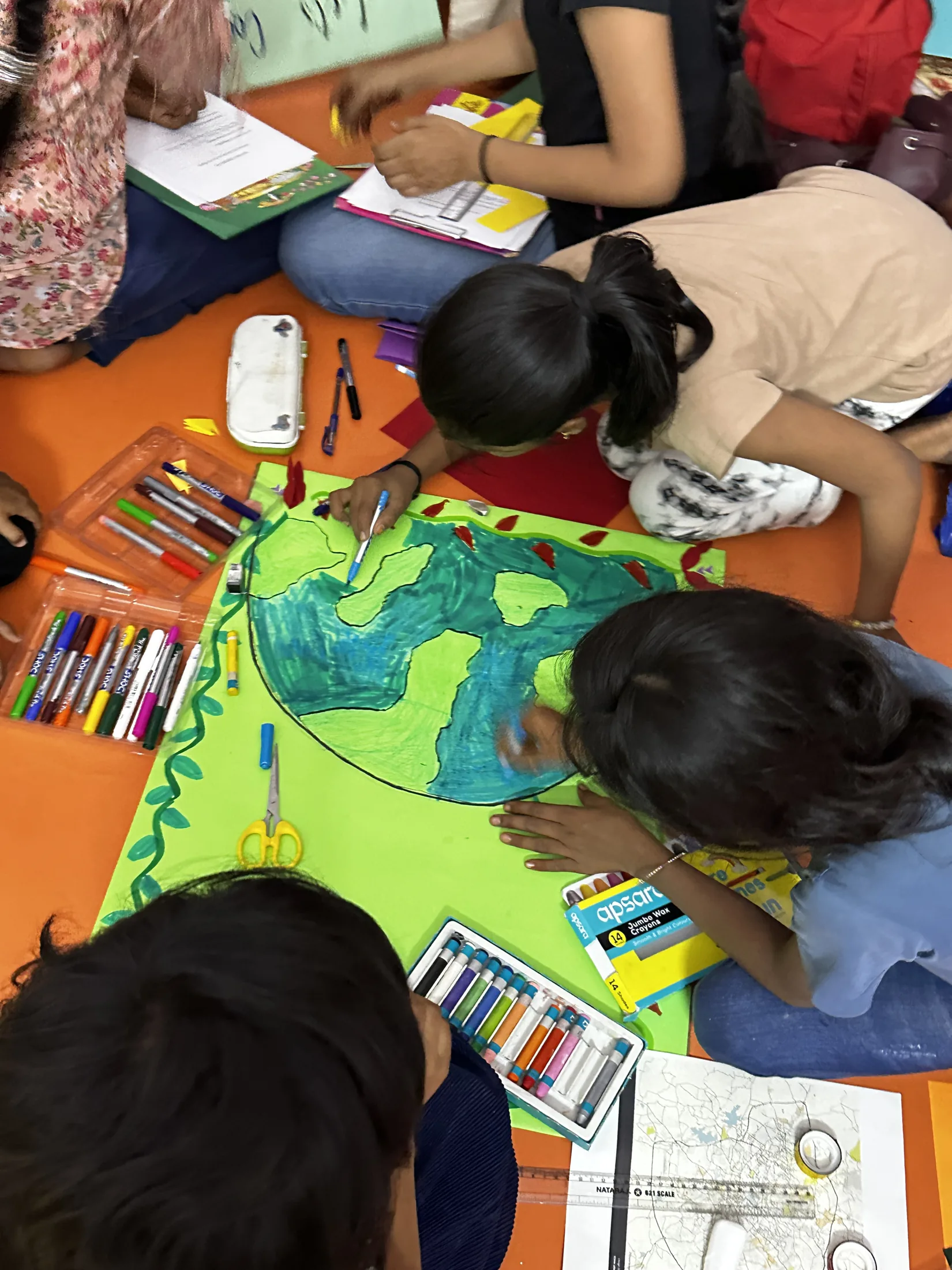
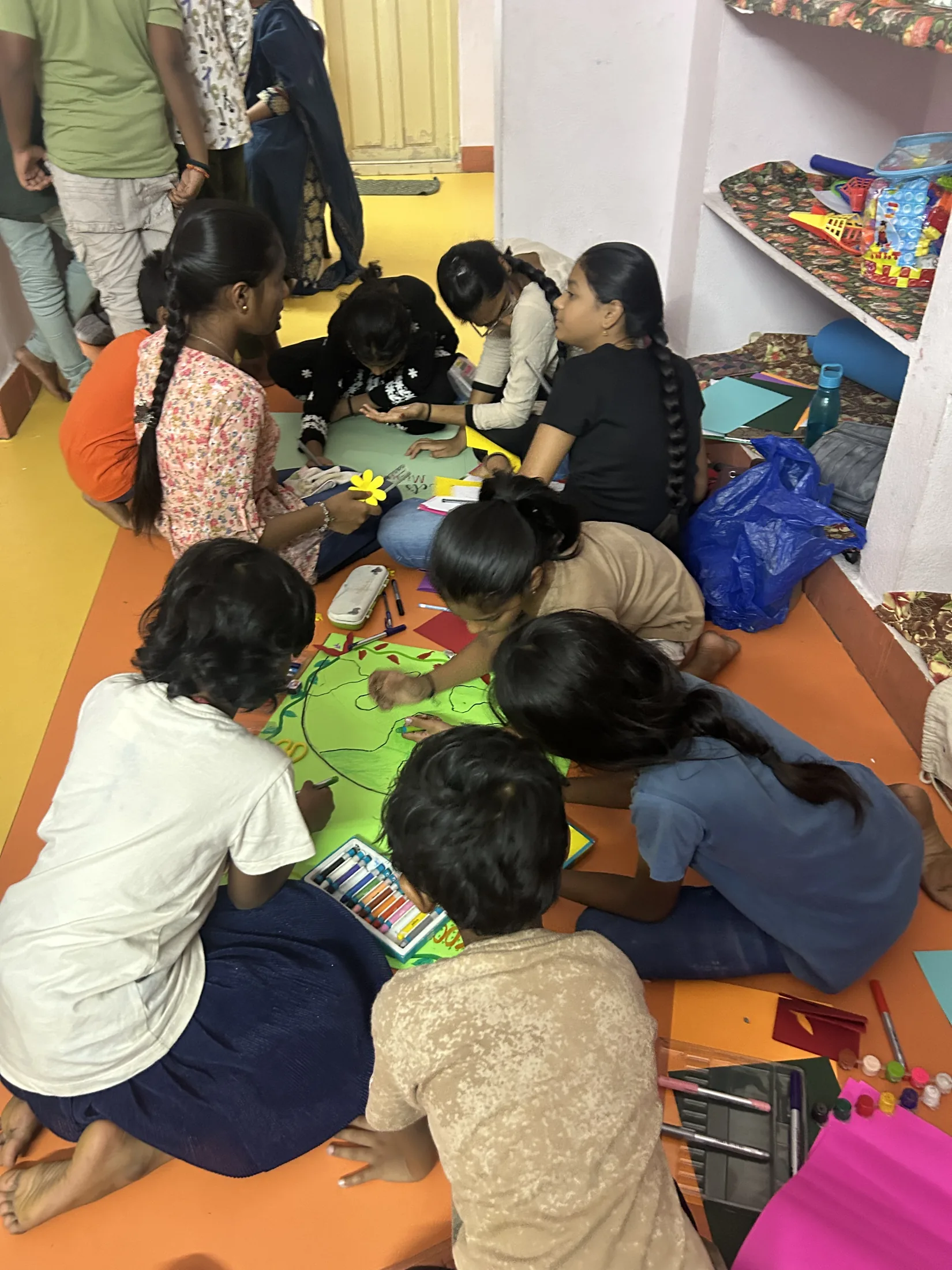
After the pollinator activity, the session moved into the Cool Your City Challenge. Here the children began translating ecological observation into design. Some used paper, markers, and poster boards to imagine greener streets and cooler urban spaces. Others developed visual models that combined drawing, discussion, and spatial arrangement. In a mode resonant with Reggio Emilia-inspired arts inquiry and broader STEAM education, the work asked children not simply to repeat information, but to externalize what they had understood and propose what should be done differently.
This was one of the most compelling transitions of the day. The children had just been asked to think about how insects and plants depend on each other. They were then asked to carry that relational thinking into city design. What kinds of spaces offer shade, habitat, cooler surfaces, and living support systems? What would a greener city look like if one took seriously the needs of people, pollinators, trees, and the wider local climate?
Children’s proposals and public expression
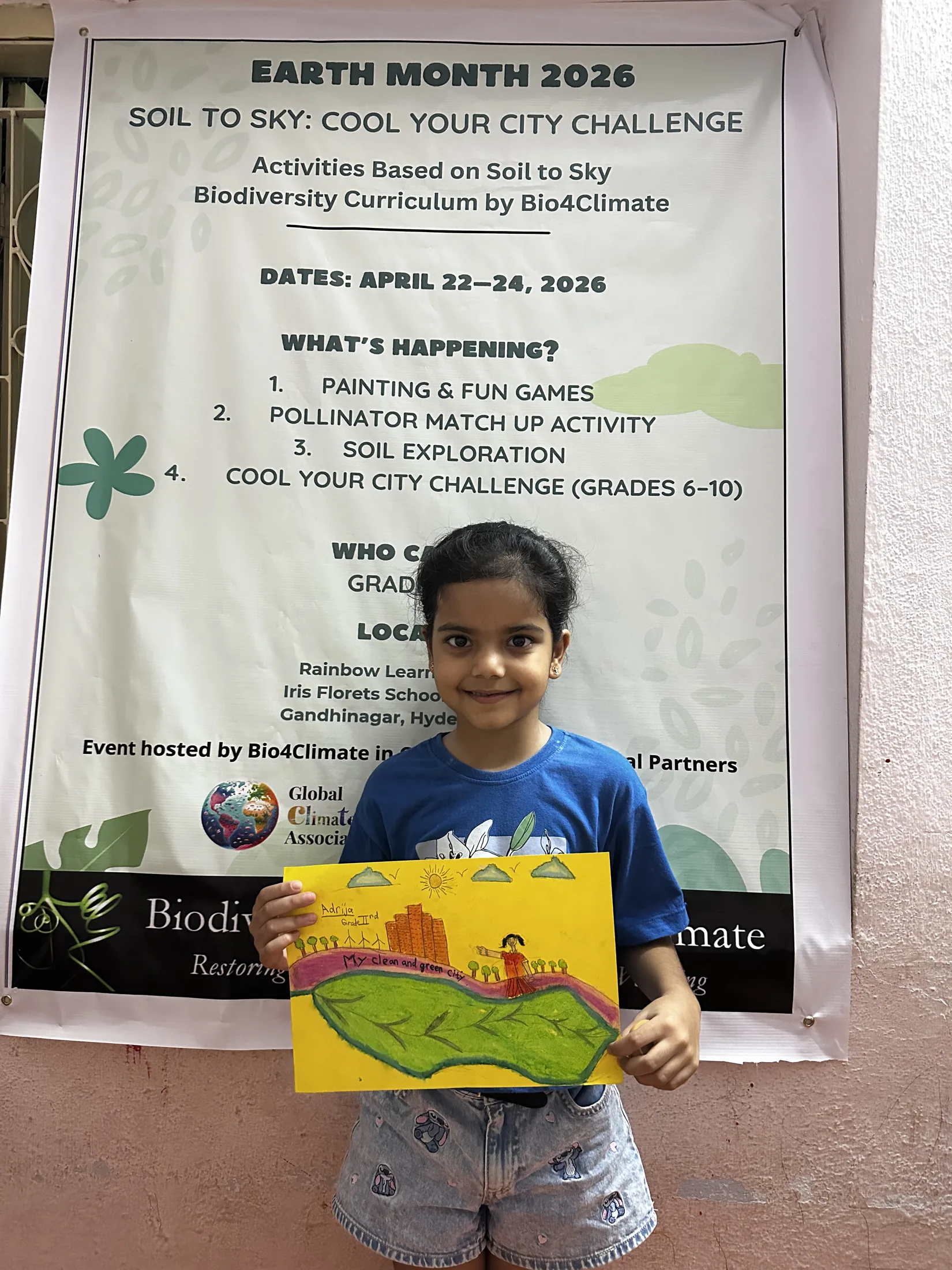
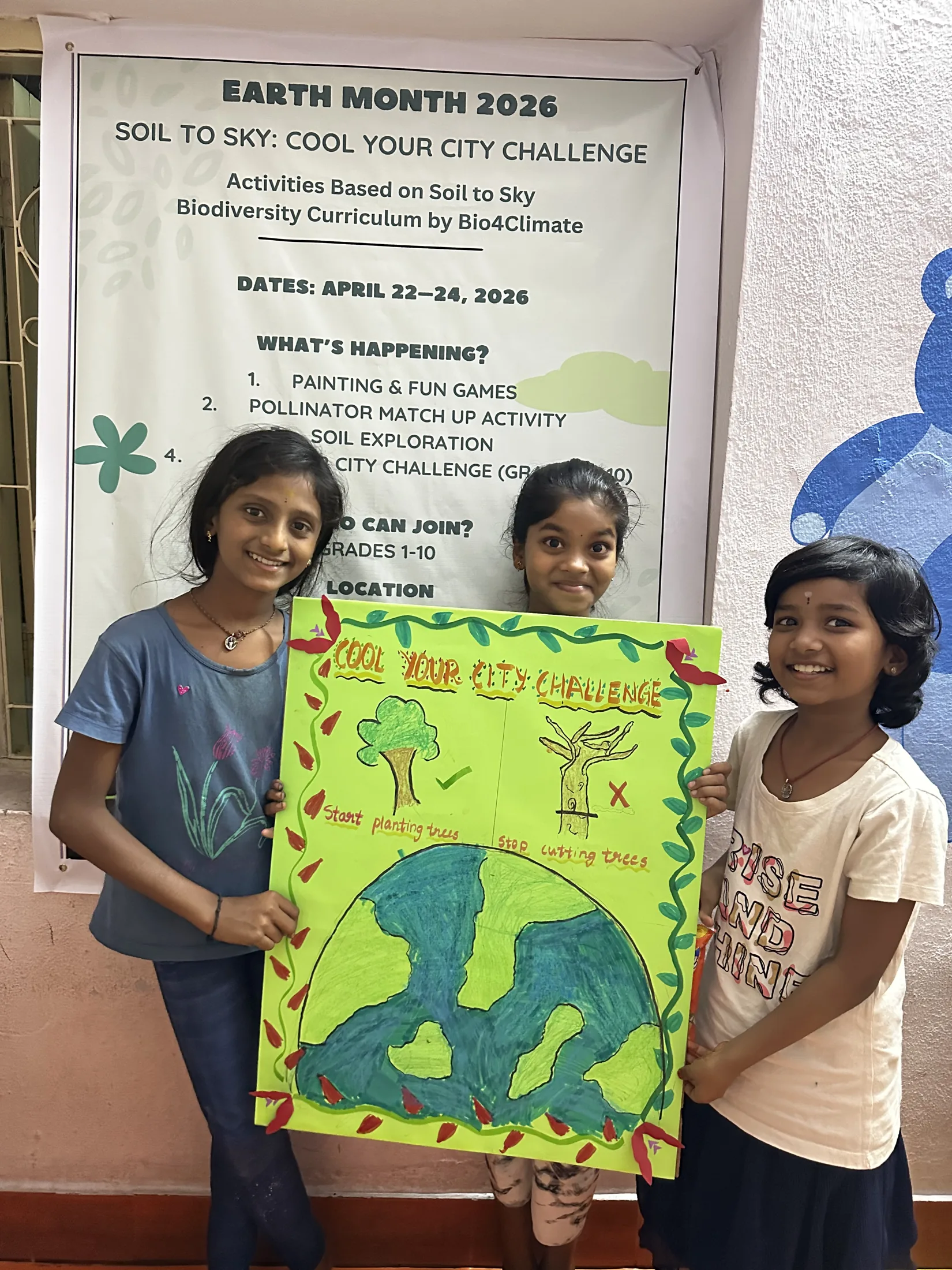
As the activity progressed, the children’s work became more explicit in its public message. Their posters did not remain private sketches. They became arguments about what kinds of urban futures should be built, protected, or repaired. Some works emphasized greenery and livability; others made direct claims about planting trees, reducing cutting, and imagining a city in which environmental care is built into everyday design.
That shift matters. Environmental education is most powerful when it gives children not only concepts, but forms of expression through which they can state what they think should happen in the world. Day two did precisely that. It connected observation, ecological dependence, climate framing, and artistic communication into a single sequence of learning.
This photo story reports on the second day of the Hyderabad program. A separate final installment will document the concluding session held on April 24, 2026, when participants present and reflect on the work developed across the three-day sequence.
Image credits: Sai Gattupalli, Ph.D.; Pollinator Matchup Game visuals sourced from Canva for Education.