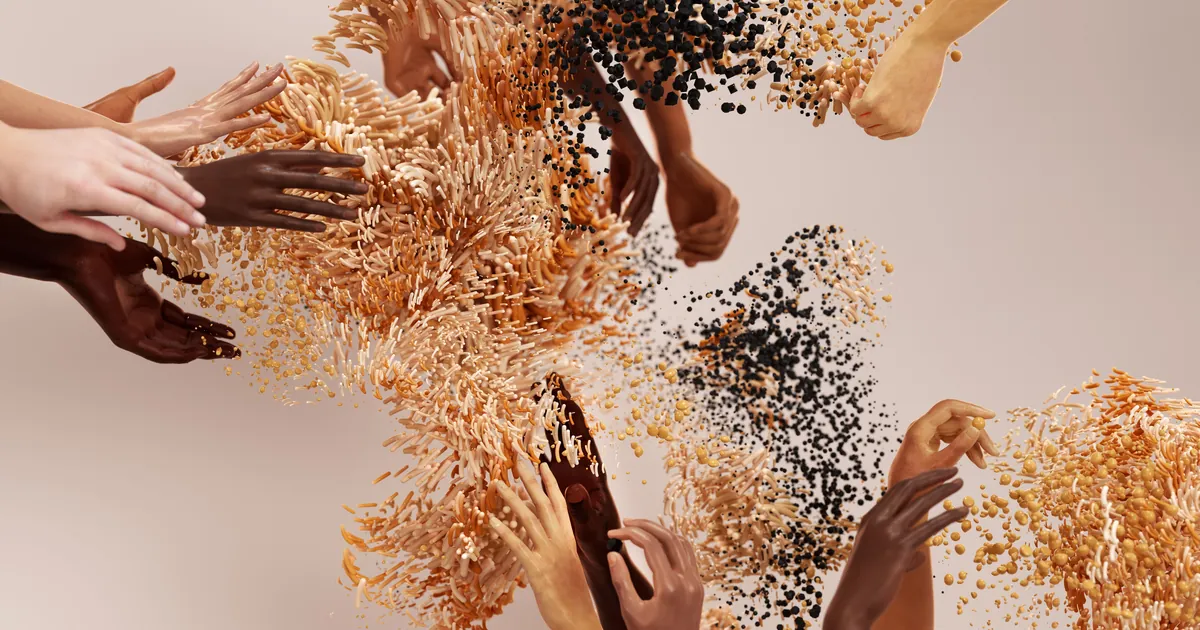
A Moral Architecture for the Age of Artificial Intelligence
While big tech competes on parameters, the Vatican names what those numbers have never measured.
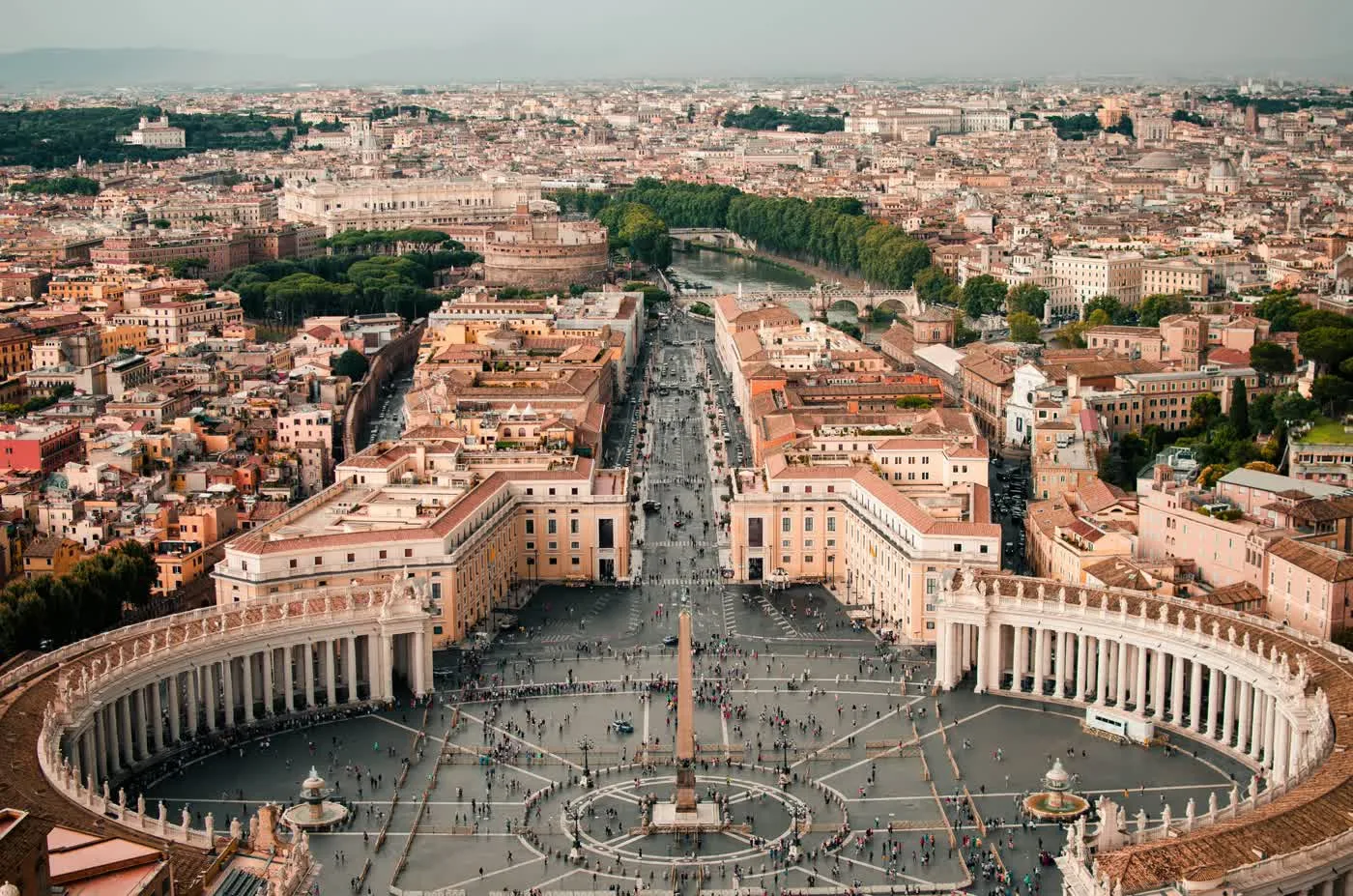
Image Credits: Caleb Miller / Unsplash
Key Takeaways
- Artificial intelligence is reshaping economies, labor, and public life faster than any governance structure can follow. The companies building it are competing, not deliberating, and the question of who holds moral authority over its direction has, until recently, gone largely unanswered.
- Pope Leo XIV's Magnifica Humanitas ["the magnificence of humanity"], a 42,300-word encyclical issued in May 2026, is the first formal doctrinal document by a major religious leader to directly address AI, naming it as neither inherently good nor evil, but as a force shaped entirely by those who design, fund, and deploy it.
- That the head of the world's largest religious institution felt compelled to address AI governance is itself a signal: the stakes of this technology now extend far beyond any single industry. When faith communities enter the conversation, the terms of accountability change.
Key Takeaways
- Artificial intelligence is reshaping economies, labor, and public life faster than any governance structure can follow. The companies building it are competing, not deliberating, and the question of who holds moral authority over its direction has, until recently, gone largely unanswered.
- Pope Leo XIV's Magnifica Humanitas ["the magnificence of humanity"], a 42,300-word encyclical issued in May 2026, is the first formal doctrinal document by a major religious leader to directly address AI, naming it as neither inherently good nor evil, but as a force shaped entirely by those who design, fund, and deploy it.
- That the head of the world's largest religious institution felt compelled to address AI governance is itself a signal: the stakes of this technology now extend far beyond any single industry. When faith communities enter the conversation, the terms of accountability change.
The numbers come fast. Hundreds of billions of parameters. Millions of tokens per second. Benchmark after benchmark. Every few months, a new model is announced as the most capable ever released, and within weeks another arrives to take its place. The competition between the largest technology companies in the world, among them OpenAI, Google, Meta, and Anthropic, has settled into a familiar rhythm: release, outperform, repeat.
What no one in that race has stopped to ask, in any sustained or binding way, is what this does to people.
Society & AI was built on a simple premise: that the consequences of artificial intelligence for human beings deserve as much serious attention as its technical capabilities. Our work is organized around four areas of inquiry. The first is knowledge and intelligence, examining how AI transforms the creation and validation of knowledge and what genuine human-machine collaboration in learning might look like. The second is systems and complexity, mapping education as a complex adaptive system and identifying the leverage points where technology might catalyze meaningful change. The third is educational equity, positioning quality learning not as a policy goal but as a compounding capability that creates the conditions for addressing every other global challenge we face. The fourth is human flourishing, investigating how agency, meaning, and dignity are preserved as cognitive labor becomes increasingly automated. I came to these questions through years of research and teaching, and through witnessing, repeatedly, what happens when AI enters communities that were never consulted about how it was designed.
Each year, I serve as a peer reviewer for papers submitted to the annual meeting of the American Educational Research Association (AERA), one of the largest gatherings of education researchers in the world. Among the many scholarly divisions under which researchers submit their work is one titled Religion and Education, a division I review for. This is not incidental. The fact that one of education research’s most rigorous professional bodies formally recognizes this connection reflects something important: religion and education are not separate domains but deeply entangled ones, shaping the values and institutions through which human beings learn to be in the world. That entanglement is part of what moved me to write this piece.
On May 15, 2026, an unexpected voice entered that space with unusual force.
The Church Speaks to “All People of Good Will”
Pope Leo XIV released Magnifica Humanitas [roughly, “the magnificence of humanity”], a 42,300-word encyclical addressed not to Catholics alone, but to “all people of good will” (Leo XIV, 2026). That phrase is deliberate. What follows is not a theological argument for the faithful. It is a moral argument for a world facing a shared transformation.
The historical parallel is striking. His namesake, Pope Leo XIII, published Rerum Novarum [roughly, “on new things”] in 1891, a document that addressed worker dignity and the dangers of unchecked capital at a moment when industrial power was reshaping society faster than governance could follow. One hundred and thirty-five years later, Leo XIV has done the same for the digital revolution. Rerum Novarum did not stop industrialization. It helped establish a moral vocabulary of solidarity, common good, and dignity that shaped labor policy for generations. Magnifica Humanitas is attempting the same work for AI.
The Babel Problem
The encyclical opens with two biblical images: the Tower of Babel and Nehemiah’s rebuilding of Jerusalem. The Babel story, of a civilization so consumed by self-assertion and uniformity that communication breaks down, is not framed as ancient history. It is framed as a live risk.
The diagnosis is accurate. A small number of companies, operating within a narrow range of cultural and commercial frameworks, are building systems that will shape what billions of people know, believe, and are permitted to do. Their shared assumption, that progress in benchmark performance constitutes progress for humanity, goes largely unchallenged. The diversity of voices that might complicate it is absent from the rooms where decisions are made. That is Babel, not by moral failure alone, but by structural design.
A Confession from Inside the Machine
What gave the encyclical’s release particular resonance was the presence of Christopher Olah, a co-founder of Anthropic, who appeared alongside the Pope at the presentation. His words were direct: “We need moral voices that the incentives cannot bend. Today is just the beginning, the start of a long collaboration between those who are building this technology and those who can see what they, from the inside, cannot.”
This is a significant thing for someone building frontier AI to say publicly: that the incentive structures governing AI companies, including competitive pressure, investor expectations, and quarterly performance, are not sufficient to produce the deliberation that technology at this scale requires.
What the Document Actually Demands
Magnifica Humanitas is not vague. It calls for government regulation of private AI companies, noting that these entities now command resources exceeding those of many nation-states. It demands protection for workers threatened by automation, calling mass forced inactivity alongside high technical development “a paradox of material progress and anthropological regression.” It calls for education that equips children to think critically about AI-generated content, and for guardrails ensuring humans retain responsibility for weapons decisions.
These are governance positions, not soft suggestions. And they come from an institution not optimizing for next quarter’s earnings.
Why This Matters Beyond Faith
I am not a theologian. I approach this as a researcher who has spent years studying what happens when AI systems enter communities never part of the conversation about how those systems were built. The vocabulary that Magnifica Humanitas brings, namely dignity, solidarity, and the common good, is not religious vocabulary in the narrow sense. It is moral vocabulary the AI industry does not yet have and urgently needs.
The encyclical insists that technology be judged not by what it can do, but by what it does to people. That is the standard Society & AI was built to apply. The AI companies will keep building. The benchmarks will keep climbing. What is needed now, and what has arrived unusually from Rome, is a moral architecture equal to the scale of what is being built. I am glad someone finally said it clearly.
References
Leo XIV, Pope. (2026, May 15). Magnifica humanitas: Encyclical letter on safeguarding the human person in the time of artificial intelligence. The Holy See. https://www.vatican.va/content/leo-xiv/en/encyclicals/documents/20260515-magnifica-humanitas.html
Leo XIII, Pope. (1891, May 15). Rerum novarum: Encyclical letter on capital and labor. The Holy See. https://www.vatican.va/content/leo-xiii/en/encyclicals/documents/hf_l-xiii_enc_15051891_rerum-novarum.html
Cite this article
Gattupalli, S. (2026). A moral architecture for the age of artificial intelligence. Society and AI. https://societyandai.org/perspectives/moral-architecture-age-of-artificial-intelligence/
Write for Society & AI
We welcome contributions from educators, researchers, librarians, policymakers, and practitioners examining the intersection of artificial intelligence, education, and society. All work published on Society & AI is made available free of cost and in open access, in service of education and the public good. Write to us at submissions@societyandai.org.