
We often speak of “adopting” new technologies, integrating a tool into a workflow, installing software, or buying the latest device. But as we stand on the precipice of a fundamental societal shift driven by artificial intelligence, adoption is only half the equation. The more profound challenge, and the more critical necessity, is “adapting.”
Adopting is about utility; adapting is about evolution. Adopting is bringing the tool to the task; adapting is changing the task, and perhaps the self, to leverage the new reality. In the emerging AI societies, we must do both simultaneously. And the vehicle that enables this dual movement, the bridge between the raw power of silicon and the potential of the human mind, is education.
The Velocity of Change
The urgency of this conversation is underscored by the relentless pace of technological advancement. Currently, all chatbots, including the very recent Gemini 3 from Google, are showing breathtaking performance across all benchmarks. The capabilities we see today in reasoning, coding, and multimodal understanding were science fiction only a few years ago. These models are not just answering questions; they are generating code, creating art, and solving complex logic puzzles with a fidelity that challenges human expertise.
It is only a matter of weeks or months before every other major player releases their next iteration. We are on a trajectory where Gemini 4, 5, and their counterparts from other labs will arrive with increasing frequency and capability. The window between “state of the art” and “legacy” is shrinking to a vanishing point. If we focus solely on adopting, on learning the specific quirks of today’s model, we will be perpetually obsolete, constantly running on a treadmill of updates and patch notes.
The Force Multiplier
I say this mainly because no matter how many iterations, improvements, and step changes happen in the model architectures, the force multiplier ultimately converges and focuses on education.
The most powerful AI system is inert without a human intent to guide it. The most sophisticated reasoning engine is useless without a human question to provoke it. As AI models become more capable, the bottleneck shifts from the technology’s limit to the user’s imagination and critical capability. The “force” is the AI, but the “multiplier” is the educated human mind.
This is why education is the vehicle for adaptation. It is not enough to teach students how to use a specific AI tool, because that tool will change by the time they graduate. Instead, we must teach them the principles of AI fluency and AI literacy. We must cultivate the meta-skills of adaptation: cognitive flexibility, ethical reasoning, and the ability to learn continuously. We need to move beyond the “how-to” of interface interaction to the “why” and “what-if” of systems thinking.
Starting with Early Learners
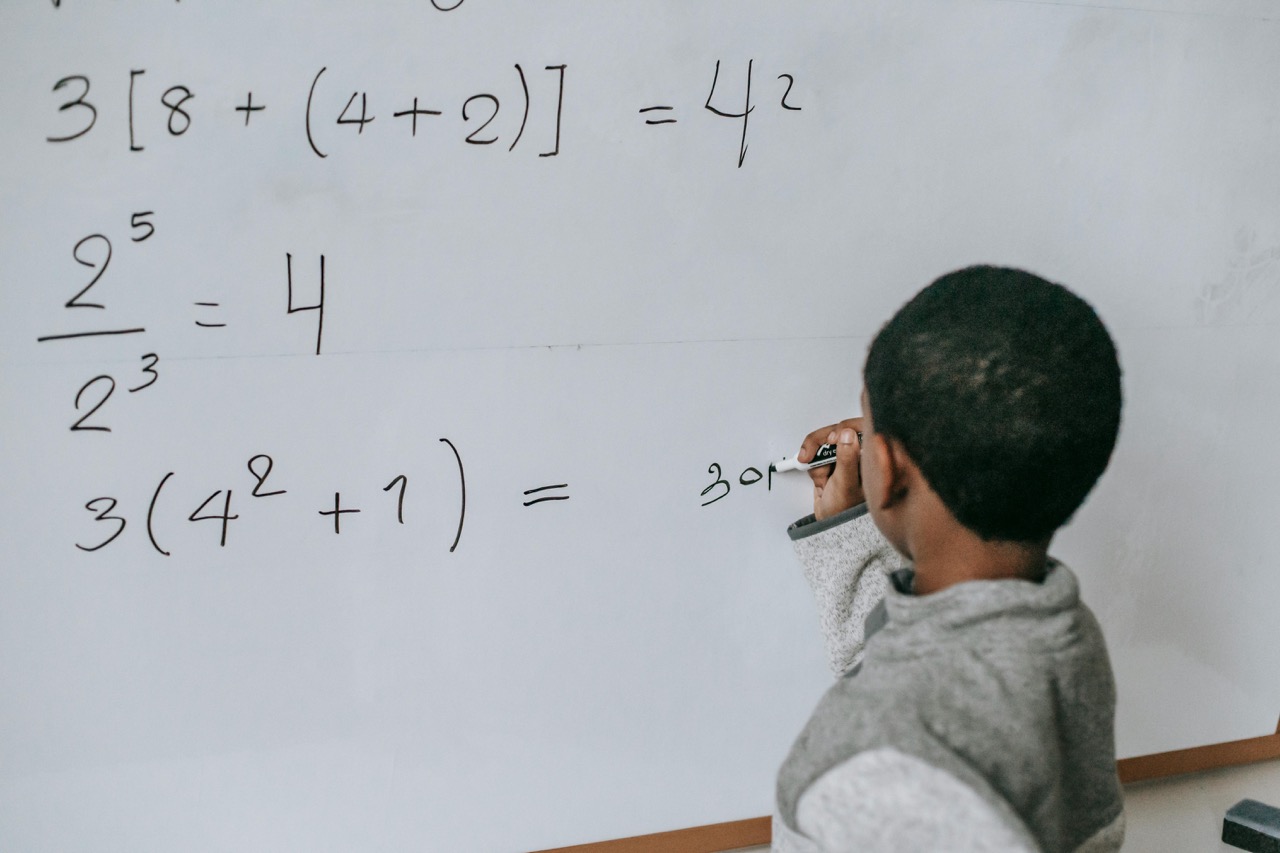
We need to start educating early learners because this is where we should be training them to be more AI fluent and AI literate. Children growing up today are the first generation of true “AI natives.” For them, adoption will be intuitive. They will talk to machines as naturally as they talk to friends. But intuition is not the same as understanding.
The challenge for educators is to ensure these young minds are also adapting. Are they learning to question the output of the AI? Are they understanding the difference between a probabilistic answer and a factual truth? Are they developing the creative confidence to use AI as a partner rather than a crutch?
We must design curricula that treat AI not as a forbidden shortcut, but as a new medium of thought. Just as we teach grammar to structure language and logic to structure arguments, we must teach “AI rhetoric”, how to converse with, guide, and evaluate synthetic intelligence. By embedding AI literacy into early education, we are not just preparing workers for the future economy; we are preparing citizens for a future society. We are giving them the tools to shape the technology rather than be shaped by it.
The Symbiosis of Adopting and Adapting
Adopting and adapting are not separate processes; they are the left and right foot of our march forward. We adopt the tools to gain efficiency; we adapt our mindsets to gain wisdom.
In an AI society, the risks of failing to adapt are high. We risk creating a divide not just of access, but of understanding, a society where a few wizards command the algorithms while the many are directed by them. We risk surrendering our agency to black boxes we do not comprehend.
But the opportunities are equally vast. If we can successfully adopt these powerful tools while adapting our educational systems to foster human resilience and creativity, we can unlock a golden age of personalized learning and amplified human potential. We can create a society where AI handles the drudgery of computation, freeing humans to focus on the poetry of connection and the rigor of invention.
The technology will keep marching on. Gemini 3 will become Gemini 4. The benchmarks will keep rising. But the variable that will determine whether this story is one of displacement or empowerment is us. It is how we choose to learn, and how we choose to teach. Education is not just a sector to be disrupted by AI; it is the very foundation upon which a successful AI society must be built.