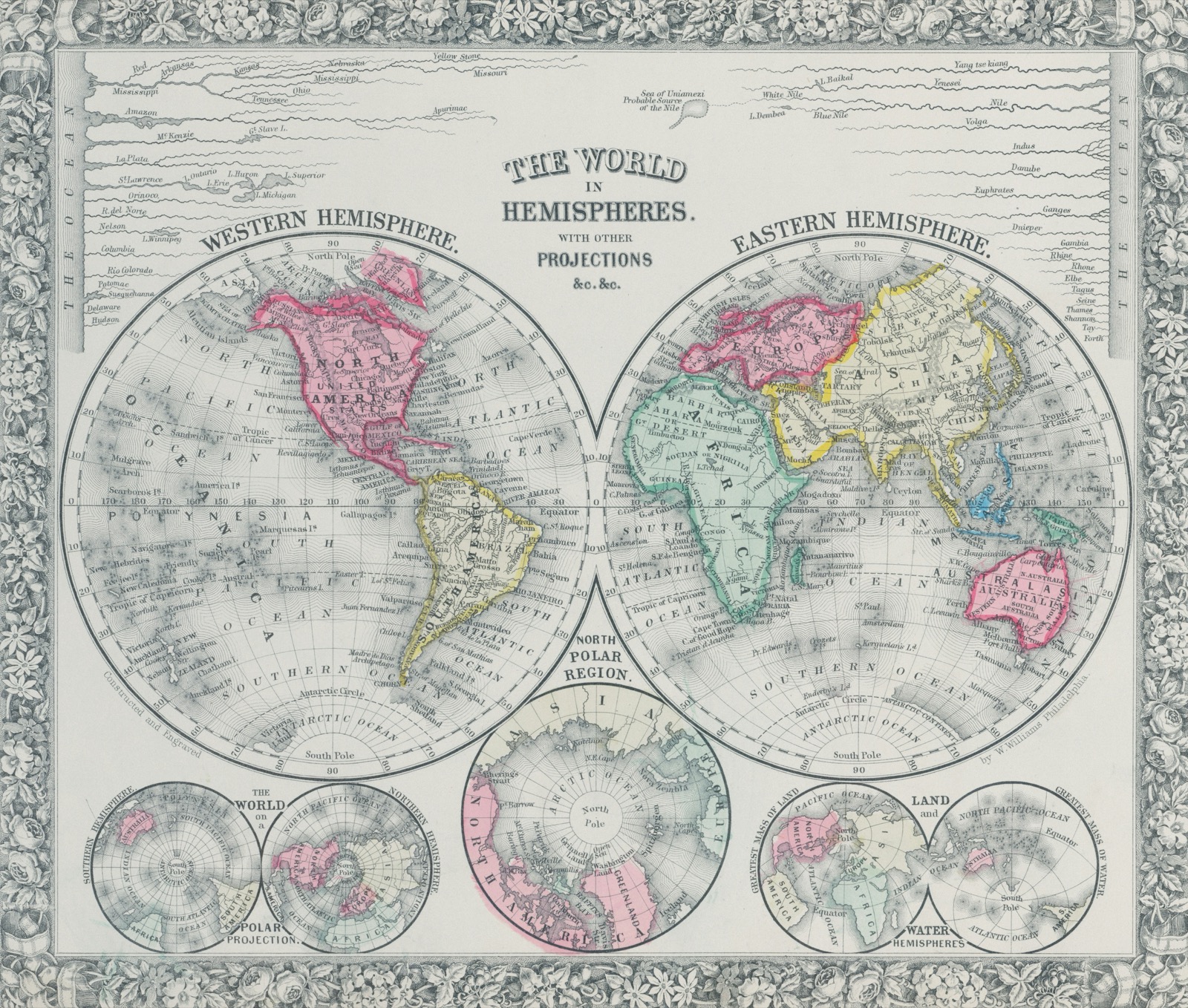

Welcome to Currents, a new monthly digest tracking the most significant developments at the intersection of AI, education, and society from around the world. Each edition covers the previous month’s latest research, policy developments, and practical innovations, helping readers understand the full spectrum of work currently shaping this rapidly evolving field. This inaugural edition synthesizes November 2025’s watershed moments in policy, research, and practice across six continents.
As an AI strategist focused on the societal and educational implications of artificial intelligence, I write this edition to examine how AI integration is reshaping educational systems worldwide, with particular attention to equity, access, and human flourishing.
TL;DR
November 2025 reveals a world divided not by whether to embrace AI in education, but rather by who gets to shape its terms. While China mandates nationwide integration and South Korea invests billions in lifetime AI literacy, the Global South faces a stark reality: 68% accessibility in the Northern Hemisphere versus a mere 23% in the Southern, with infrastructure gaps that risk transforming AI from a democratizing force into a stratification mechanism. Nations are moving from prohibition to policy, yet the shift disproportionately benefits those already positioned to lead, leaving critical questions of equity, teacher capacity, and technological sovereignty largely unanswered. The digital divide is not closing; instead, it is being systematically encoded into educational systems for generations to come. What we witness is not global progress, but rather regionalized advancement with profoundly unequal consequences for the world’s learners.
Here is the full report.
Asia-Pacific: National Mandates and Billion-Dollar Investments
China Makes History with Mandatory AI Curriculum
In an unprecedented move, China’s Ministry of Education issued guidance on strengthening AI education in primary and secondary schools, positioning China as the first major nation to mandate comprehensive K-12 AI education nationwide. Hangzhou in Zhejiang province announced mandatory AI courses for all students starting the new semester, explicitly linking AI education to national innovation goals. The guidance promotes project-based learning and calls for whole-of-government coordination with pilot programs.
South Korea’s $1.25 Billion Lifetime AI Strategy
On November 10, 2025, South Korea’s Education Ministry unveiled its first national blueprint titled “AI Talent Development Plan For All,” committing 1.4 trillion won (US$1.25 billion) to integrating AI education from elementary through postgraduate levels. The comprehensive strategy establishes AI Education Support Centres at regional offices by 2028 and expands AI-focused schools from 730 in 2025 to 2,000 by 2028, including new AI-oriented Meister vocational high schools.
The investment addresses South Korea’s paradox of ranking 13th globally in AI talent despite placing 6th in overall AI competitiveness—a gap the government considers a national priority.
Regional Dialogue on AI Adoption Challenges
On November 11, the Economic Research Institute for ASEAN and East Asia (ERIA) and OECD hosted a joint webinar examining AI adoption patterns across Europe and China. Professor Andrés Rodríguez-Pose from LSE highlighted a critical insight: AI adoption requires general skills that are accessible broadly, while AI generation demands specialized skills that tend to cluster in advanced regions, framing the challenge facing Asia-Pacific economies as fundamentally dual-track.
Europe: Trust, Governance, and Ethical Frameworks
Nordic Model Emphasizes Restraint and Accountability
Denmark released national AI guidelines for schools built on seven recommendations balancing opportunity with restraint: unified school frameworks, GDPR compliance, subject-level rules for student use, and mandatory teacher competence. The approach reflects Nordic values of trust, accountability, and parental involvement rather than top-down prohibition.
Italy Aligns AI Education with National Strategy
Italy’s Ministry of Education issued AI guidelines aligned with the country’s 2024-2026 AI strategy, emphasizing human-centric, lawful, and ethical frameworks. The guidance encourages initiatives improving learning and inclusion while maintaining uniform standards and mandating staff training—a governance scaffold moving from pilot projects toward system-wide reliability.
Latin America & Caribbean: Partnership Models and Mobile-First Reality
UNESCO-IBM Framework for Regional Higher Education
On November 12, UNESCO’s International Institute for Higher Education in Latin America and the Caribbean (IESALC) partnered with IBM to develop the first AI competence framework specifically designed for Latin American higher education contexts. The collaboration aims to equip educators and students with ethical AI application skills tailored to regional needs.
Mobile Devices as Primary AI Gateway
Groundbreaking research published November 29 in BMC Medical Education documented smartphone use patterns among medical students across seven Latin American countries. The multicenter study found 98.4% mobile phone ownership with 88.2% using devices for academic purposes—revealing mobile devices as the primary AI access point in resource-constrained contexts, contrasting sharply with desktop-focused approaches in the Global North.
Regional AI Competitiveness
The Latin American Artificial Intelligence Index (ILIA) reconfirmed Chile, Brazil, and Uruguay as regional pioneers in AI adoption. However, broader patterns suggest concerning talent drain across the region, with exceptions only in Costa Rica and Uruguay.
The Inter-American Development Bank hosted events November 11-13 on “Dual Training, AI, and Other Opportunities for Latin America and the Caribbean,” coordinating policy-level approaches to AI workforce development across the LAC region.
Private Sector Leadership
Colombia 4.0 Conference in Bogotá (November 1) highlighted the private sector as the driving force behind AI development in Latin America, providing a platform for regional collaboration on AI opportunities.
Middle East & Africa: Infrastructure Investments and Readiness Assessments
Bangladesh’s First AI Readiness Assessment
UNESCO and national partners released Bangladesh’s first AI RAM (Readiness Assessment Methodology). The diagnostic framework highlights strengths in e-government while identifying critical gaps in connectivity, data protection, and skills—providing evidence to guide National AI Policy development in South Asia.
North America: State-Level Momentum and Institutional Leadership
Twenty US States Issue AI Guidance
One of the month’s most significant policy developments occurred in the United States, where twenty states released AI guidance for K-12 public schools as of November 21—up from just a handful earlier in the year. States including Oklahoma, West Virginia, Washington, Montana, Ohio, and Virginia joined California and Oregon as leaders. This represents a fundamental shift from reactive prohibition toward proactive pedagogical frameworks emphasizing responsible use, ethics, and teacher training.
Wharton-OpenAI Global Educator Course
Wharton Online and OpenAI launched “AI in Education: Leveraging ChatGPT for Teaching” on Coursera on November 21, taught by AI in education pioneer Ethan Mollick. The four-module course covering generative AI essentials, ethical concerns, privacy issues, and practical applications signals mainstream acceptance of AI as a fundamental teaching competency, with global reach democratizing access to elite institutional knowledge.
Research Frontiers: Global Insights
Student Adoption Patterns Worldwide
A November 26 arXiv preprint examining LLM use by secondary students provides cross-cultural empirical insights into how K-12 students globally adopt AI-powered learning tools, focusing on accessibility and engagement patterns. The study offers crucial data as policymakers worldwide craft guidance frameworks.
Can AI Grade Fairly?
A November 19 study on AI-based grading systems investigates reliability through empirical procedures, addressing critical questions about automated assessment that transcend national boundaries. As educators worldwide face pressure to integrate AI tools, the question of fair, reliable automated grading becomes universal.
Equity as Central Global Concern
A recent arXiv paper on generative AI as catalyst explores algorithmic bias, data privacy, and equity gaps in pedagogical contexts, noting that rural and underserved schools lack AI infrastructure—risking exacerbated inequities. The authors call for collaboration between policymakers, educators, and developers, explicitly framing AI integration through an equity lens relevant to Global South contexts.
Global Conferences Shape International Dialogue
The month witnessed an unprecedented concentration of international AI-in-education convenings:
AI & The Future of Education (AIFE) brought 120+ attendees from 19 countries to Bangkok, Thailand, with 30+ sessions from 28 international experts—establishing a new Asia-focused platform for international dialogue.
Digital Education Council Global Summit convened over 100 global leaders in Singapore (November 5-6) to discuss digital education transformation with Asia-Pacific focus.
Looking Ahead
As we track these developments into December and beyond, a troubling pattern becomes increasingly clear: nations are not preparing their citizens for an AI future so much as systematically sorting them into tiers of access and capability. The wealthiest nations are building comprehensive AI literacy pipelines, while resource-constrained countries struggle with basic connectivity. What concerns me most is not the pace of change, but rather its direction—toward a world where one’s geographic and economic starting point fundamentally determines whether AI becomes a tool for empowerment or yet another mechanism of exclusion. The question facing us is not whether AI will transform education, but rather whether that transformation will honor the dignity and potential of all learners, regardless of where they live. December’s developments will reveal whether we are building bridges or deepening divides.
Research Methodology
This comprehensive review was compiled through systematic research using Perplexity AI, powered by Claude Sonnet 4.5 with advanced reasoning capabilities. All identified sources, including peer-reviewed papers, policy documents, conference proceedings, and institutional announcements, were individually examined and verified for credibility before inclusion, employing multi-layered search strategies spanning six continents, multiple publication types, and thematic dimensions including equity, governance, ethics, and pedagogy. All cited URLs were independently verified for accessibility and reliability prior to publication.
Currents is a monthly digest tracking developments at the intersection of AI, education, and society. Each edition synthesizes research, policy, and practice from around the world to provide educators, researchers, and policymakers with essential context for this rapidly evolving field.