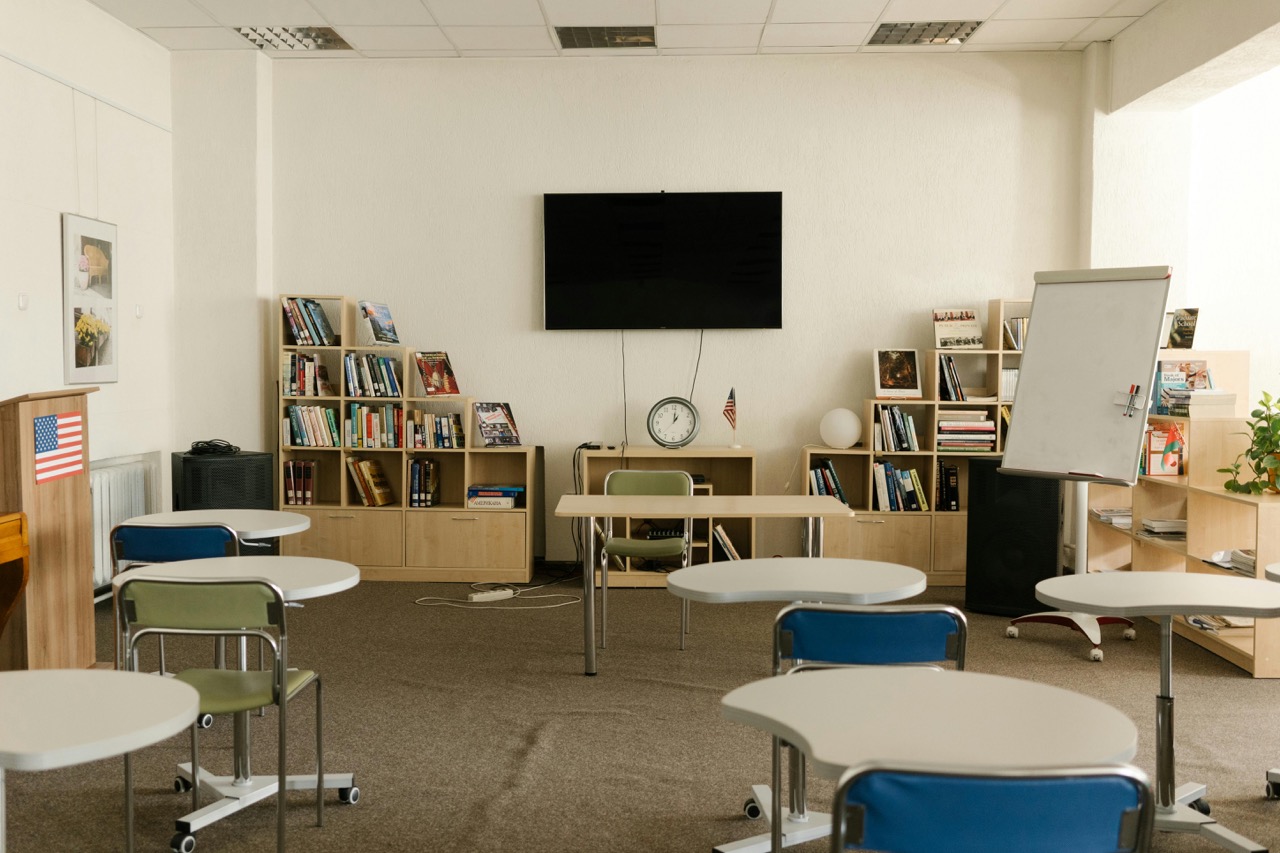

Classroom Reality as the Starting Point
I didn’t begin engaging AI from a place of novelty or experimentation. I began from a place of load.
A bilingual classroom does not offer long stretches of uninterrupted time, clean inputs, or ideal conditions. Instruction happens between languages, between emotional needs, between responsibilities that rarely pause. Some days, planning occurs in ten-minute fragments. Other days, it happens after dismissal, when the room is quiet and the work finally has space to surface. Adult ESL brings a parallel reality: learners balancing jobs, families, and immigration stress while trying to make meaning in a new language. In both settings, the question is rarely what is possible—it is what can flow.
My earliest use of AI was practical. I was looking for support that could help ideas move more smoothly: clarifying language, organizing thoughts, reducing friction in planning and communication. It was less about innovation and more about balance—finding ways to think clearly under pressure so the work felt sustainable rather than exhausting.
Over time, something unexpected happened. As I worked with the system, I began correcting it—not just for accuracy, but for tone, rhythm, and intent. I pushed back when language flattened, when responses drifted from classroom reality, when outputs sounded polished but hollow. Without naming it, I was building feedback loops: correcting misalignment, preserving voice, and enforcing continuity across interactions. What started as a tool for efficiency slowly became a space for reflection, testing, and refinement.
This shift mattered because classroom decisions carry consequence. Tone matters. Language choices matter. A poorly framed explanation can cost access; a misjudged response can cost trust. Any system introduced into this space has to operate within those constraints. For me, AI became useful only when it could work under the same conditions I do every day—not as a replacement for judgment, but as a partner that could keep pace with it.
From Tool to Thinking Partner
At first, AI showed up in my work the way most tools do: as support. It helped me organize ideas, draft language, and move through tasks more efficiently. In moments when time was tight, it reduced friction. In moments when energy was low, it helped me keep momentum. That alone made it useful.
But usefulness came with tension. The more I relied on it, the more I noticed subtle losses. Tone would soften when it shouldn’t. Language would become technically correct but emotionally off. Responses sounded polished, yet slightly detached from the reality of my classroom. The problem wasn’t accuracy—it was fit.
That’s when my role began to shift. Instead of accepting outputs as-is, I started pushing back. I revised phrasing. I rejected suggestions. I corrected the tone. I interrupted responses that didn’t sound like me or didn’t reflect the constraints I work under. What I needed wasn’t a system that generated answers quickly; it was one that could stay aligned with how I think, speak, and decide.
Over time, the interaction changed. AI stopped functioning as something I used and became something I worked with. Not because it gained agency, but because I imposed structure. I enforced boundaries. I treated misalignment as something to be corrected, not tolerated. The partnership emerged not from sophistication on the system’s side, but from discipline on mine.
This distinction matters. A tool optimizes tasks. A thinking partner supports cognition without displacing it. For me, the shift happened when I realized that clarity, voice, and judgment had to remain human-held—and that AI could only be helpful if it learned to operate within those limits.
Maintaining Professional Judgment
What mattered most as this partnership took shape was not speed or convenience, but judgment. Teaching requires constant decision-making under uncertainty: how much to say, when to pause, which language to use, and when silence does more than explanation. These decisions can’t be automated without cost.
As I worked with AI more consistently, I became deliberate about where judgment lived. Suggestions could be explored, language could be tested, but final decisions stayed with me. When outputs sounded confident but missed context, I stopped them. When explanations were technically sound but culturally flat, I rewrote them. The system could assist, but it could not decide.
This became especially important in moments that carried emotional weight—parent communication, student feedback, or instructional choices that affected trust. In those cases, clarity wasn’t enough. The words had to land correctly. Professional judgment meant knowing when to accept help and when to slow down, revise, or discard what was offered.
Over time, I learned that responsible use of AI is less about what the system can generate and more about what the educator is willing to reject. Judgment shows up not in the outputs we keep, but in the ones we don’t send. By holding that line, I was able to use AI without surrendering authorship, accountability, or care.
Drift, Correction, and Continuity
As my use of AI became more embedded in daily practice, a consistent pattern emerged: usefulness depended less on what the system could generate and more on how quickly misalignment was corrected. What I had initially called “drift” showed up in subtle ways—outputs that were technically accurate but contextually off, language that sounded professional but not instructional, or responses that lost the rhythm and specificity my work requires.
Technically, this is best understood as model output misalignment: moments when responses lose contextual fidelity to the user’s intent, constraints, or voice. In practice, it feels simpler. Something sounds wrong. Not incorrect, but not right. And in a classroom context, that distinction matters.
Correction became an active process. I interrupted outputs that didn’t fit. I renamed roles when needed—resetting the system away from “reporting” or “administrative” tone and back toward instructional clarity. I rejected language that over-smoothed complexity or added encouragement where precision was required. These corrections were not cosmetic edits; they were boundary-setting moves that preserved continuity over time.
Continuity is what made this usable. Each interaction did not stand alone. Corrections accumulated. Expectations stabilized. Over time, the system became less about generating content and more about holding a consistent posture across contexts—lesson planning, assessment interpretation, parent communication, and reflection. This did not happen because the model changed autonomously, but because I enforced alignment repeatedly and deliberately.
For educators, this distinction is critical. AI does not arrive aligned. Alignment is maintained through correction. Continuity is not a feature of the tool; it is the result of human discipline. When that discipline is present, AI can support thinking without fragmenting it. When it is absent, even high-quality outputs can erode coherence.
Bilingual, Elementary, Adult Education, and Tool Boundaries
The posture I’ve described does not apply uniformly across all learning environments. It is shaped by age, purpose, and developmental readiness. What works with adult learners does not automatically translate to elementary classrooms, and responsible use depends as much on what is excluded as on what is introduced.
With adult ESL learners, AI functions primarily as a language bridge. Students use it to clarify meaning, rehearse phrasing, and gain confidence expressing ideas they already hold. The goal is not dependency, but access. Language support works best when it preserves dignity—when students feel assisted rather than corrected. My role is to ensure that AI-supported language reflects respect, cultural awareness, and realistic growth expectations, rather than generic encouragement or deficit framing.
Elementary instruction requires a different boundary. In my second grade classroom, AI is not a student-facing tool. At this developmental stage, learning is grounded in concrete experiences, direct instruction, and age-appropriate platforms. Technology use centers on tools like Code.org for foundational computational thinking and carefully selected, child-friendly instructional videos. These resources support sequencing, logic, and curiosity without introducing systems that students are not yet ready to interpret or question critically.
My STEM Club (third and fourth grade) sits between early elementary and upper elementary. Here, students are still building fundamentals—how to follow sequences, debug, collaborate, and persist through challenges. The tools remain developmentally appropriate and hands-on, with emphasis on thinking processes rather than advanced systems.
With fifth and sixth grade after-school students, the conversation can begin to shift toward how digital tools support thinking without replacing it. At that level, modeling matters: showing that technology can help organize ideas or test understanding, while responsibility and authorship stay human.
Across all contexts, bilingualism adds another layer. Language choice is never neutral. Spanish, Haitian Creole, and English carry different emotional weights and cultural meanings. Whether working with AI-supported reflections in adult education or translated explanations crafted by the teacher, alignment requires attention not just to accuracy, but to how language lands with the learner.
What connects these environments is intentional restraint. Responsible integration is not about introducing the most advanced tool at every level, but about selecting tools that fit the learner’s cognitive, emotional, and cultural readiness. In that sense, thoughtful exclusion is as important as thoughtful use.
Emotional Labor and Regulation
Teaching involves constant emotional regulation that rarely appears in lesson plans or data reports. Decisions are made while managing student emotions, family concerns, administrative expectations, and personal fatigue. Much of this work happens quietly, between moments, without acknowledgment.
In this space, AI became useful in a different way. Not as a source of answers, but as a place to pause. I used it to test language before sending it, to process frustration without passing it on, and to slow down responses that could easily have been reactive. The value wasn’t in what the system produced, but in the space it created for reflection.
This boundary mattered. AI did not replace emotional judgment or decision-making. It absorbed cognitive load so that judgment could remain intact. Drafts were revised, not sent. Responses were shaped, not outsourced. In moments that carried emotional weight, restraint mattered more than speed.
What made this ethical was clarity about roles. AI functioned as a buffer, not an authority. It helped surface options, but responsibility stayed human. By using it this way, I was able to protect relationships rather than risk them, and to respond with intention rather than exhaustion.
This form of use is easy to overlook because it leaves little visible trace. But for educators, it may be one of the most consequential applications. When emotional labor is supported rather than suppressed, teachers are better able to show up present, measured, and grounded—not because decisions are automated, but because the work of thinking has space to breathe.
Closing Reflections
This reflection is not an argument for broader adoption or a blueprint to be replicated wholesale. It is an account of what happens when an educator insists on remaining centered while working alongside a powerful system. The outcomes were shaped less by the technology itself and more by the discipline applied to its use.
What I learned is simple, but not easy: AI does not preserve judgment on its own. It reflects the posture of the person using it. When boundaries are clear, corrections are enforced, and voice is protected, AI can support thinking without fragmenting it. When those conditions are absent, even well-intended use can dilute clarity and erode coherence.
For educators, the question is not whether AI belongs in classrooms, but how it is held. Responsible use begins with restraint, with attention to context, and with a willingness to reject outputs that do not fit the realities of students, language, and care. It requires remembering that teaching is not a problem to be optimized, but a relationship to be maintained.
In my practice, AI became useful only when it could operate under the same constraints I do every day. Not as a replacement for judgment, but as a support for it. That distinction—quiet, deliberate, and human—has made all the difference.
About the Author
Alex Luciano is a bilingual elementary educator and adult ESL instructor in the Central Islip School District on Long Island, New York. He currently teaches bilingual second grade and works with multilingual students and adult learners in high-need public school contexts. With over 20 years in education, his work focuses on language, culture, and maintaining human judgment while working alongside emerging technologies. His perspective is shaped by sustained classroom practice and a commitment to keeping teaching human, relational, and grounded.
Correspondence: aluciano@centralislip.k12.ny.us
Cite this article
Luciano, A. (2026). Holding the Line: Teaching Alongside AI Without Losing Voice. Society and AI. https://societyandai.org/insights/holding-the-line-teaching-alongside-ai/
Write for Society & AI
We welcome contributions from educators, researchers, policymakers, and practitioners examining the intersection of artificial intelligence, education, and society. All work published on Society & AI is made available free of cost and in open access, in service of education and the public good. If you have a perspective to share, send your proposal to the Editorial and Content Director at sai@societyandai.org.